Power, Betrayal and One Terrible Castle
“On the Scent” turns a hunt through Timmony into a study of borrowed authority, as Wicander wrestles with inherited status and Casimir discovers how little respect betrayal actually bought him.

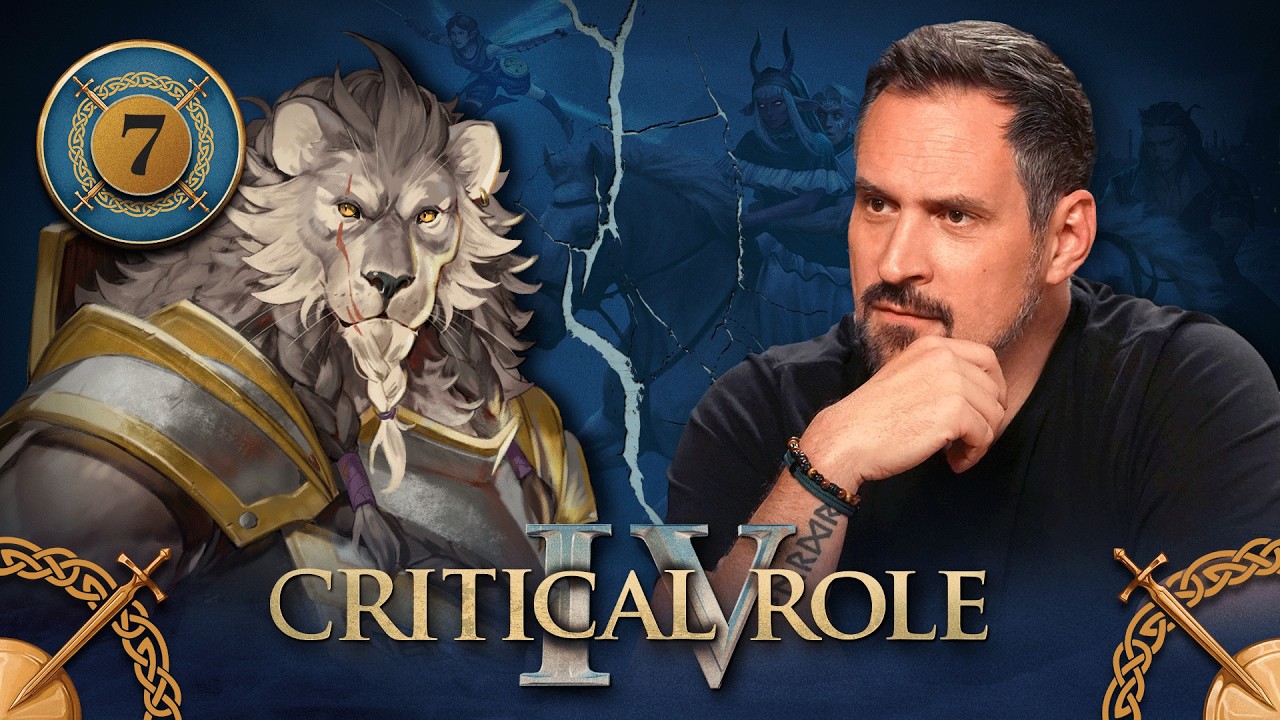
A slow-burning, character-rich political chapter whose excellent final act turns Casimir’s miserable elevation into one of Campaign 4’s sharpest studies of power and legitimacy.
What worked & what held it back
- Casimir is made pathetic without ever becoming harmless
- The episode gives Campaign 4’s power and legitimacy themes unusually clear focus
- Wicander’s inherited authority develops into a compelling character problem
- Timmony’s regional worldbuilding feels distinctive and politically relevant
- Travel, route and pursuit deliberations slow the middle of the episode
- Cyd’s trail advances without resolving his actual location
Warning: This review contains full spoilers for Critical Role Campaign 4, Episode 7.
Casimir Gavendale betrayed Thjazi Fang and was rewarded with a castle.
That sounds impressive right up until you see the castle.
Critical Role Campaign 4 Episode 7, “On the Scent,” spends much of its runtime chasing Cyd through Timmony, navigating unfamiliar customs and debating how best to reach a man the Soldiers have every reason to despise. It is not the campaign’s fastest episode. At times, it mistakes deliberation for tension, with enough discussion about horses, roads and pursuit routes to make you wonder whether someone should simply point north and start riding.
Then Castle Sloak appears.
And suddenly almost everything the episode has been doing snaps into focus.
Because Episode 7 is not really about catching Casimir.
It is about power.
Who has it. Who thinks they have it. Who borrows it from institutions. And, most importantly, what people do when someone reminds them just how little they actually possess.
Casimir provides the clearest answer.
He does not hate the system that humiliates him.
He hates that he is not higher within it.
That distinction turns “On the Scent” from a largely transitional travel episode into one of Campaign 4’s more revealing character studies so far.
Episode 7 Is Really About Who Holds Power
The episode announces its interests before the Soldiers even return.
Back in Dol-Makjar, Dean Kora Keplenvaisreck is already helping reshape the political narrative around the five Sundered Houses. Her inauguration at the Penteveral openly welcomes their representatives and introduces the Cormoray Scholarship for Arcane Service.
Her declaration is telling:
“Old ways are dying. We represent nothing if not the triumph of the new!”
That is more than ceremony.
The Sundered Houses are no longer merely demanding restoration on historical grounds. Respected institutions are beginning to lend their return prestige, permanence and the appearance of progress.
“Give us back what we lost” is an argument about the past.
“We represent the future” is an argument about inevitability.
That idea — borrowed legitimacy — becomes the episode’s real connective tissue.
Elsewhere, Lady Amariya Dacen Cormoray visits Bolaire at the Archanade and asks pointed questions about the Pariah Blades, celestials, the death of the Trickster and Halandil Fang. None of those questions are resolved here, but the sequence is an effective reminder that Campaign 4’s world does not freeze whenever the table changes.
The Soldiers may be miles from Dol-Makjar.
The institutions around them are still moving.
The Candescent Creed Shows Wicander What Authority Can Become
Timmony immediately feels unlike the lands the Soldiers have crossed before: wet, poor, sheep-covered and shaped by customs that appear much older than the political forces now pressing against them.
One of those forces is the Candescent Creed.
The episode is careful not to make its growing influence easy to dismiss. Creed followers have done genuine good. They tend wounds. They help vulnerable settlements protect themselves from undead threats. People have practical reasons to be grateful.
That makes what happens at the chapel more uncomfortable, not less.
Acolyte Tholomoine practically collapses under the significance of Wicander Halovar entering the room. To him, Wick is not a confused young man reconsidering his family’s theology.
He is a Halovar.
Authority enters before Wicander has done anything to earn it.
Then Thimble asks why local fairy charms have been removed.
Tholomoine’s reaction to discovering that she is a pixie makes clear how doctrine has moved beyond interpretation and into ordinary prejudice.
The contrast with Tyranny is particularly ugly. Tholomoine initially recoils from her demonic nature, but once Wicander reframes her as someone touched by the Light, he suddenly has a place for her inside his worldview.
A demon can be redeemed into the system.
The pixie is treated as something the system has already decided should not belong.
Later, Tasker remembers an older relationship with the fair folk: bottles left after midsummer celebrations, herbs and acorns appearing in return. His response to Thimble is not suspicion but something close to reverence.
The old customs are not presented as a flawless alternative to organised religion. They do, however, demonstrate that hostility toward the fae is not inevitable.
It has been taught.
Reframed.
Institutionalised.
Wicander is not merely discovering that people interpret the Creed in ways he dislikes. He is watching one belief system begin to overwrite another way of living.
And his family name helped give that process authority.
Wicander Is Learning That Status and Leadership Are Not the Same Thing
No Soldier fits Episode 7’s central argument better than Wicander Halovar.
Wick possesses almost everything that should make authority easy.
His family name matters. His religious position matters. He has grown up surrounded by institutions that taught him those things matter.
The problem is that none of them automatically make him convincing.
Sam Riegel has been quietly building one of the Soldiers’ better character arcs around that contradiction. Wicander wants to lead, but he has not yet understood the difference between having status and earning trust.
Arderin widens that problem.
A Candescent preacher invokes the Light while denouncing anyone who places themselves above others, and the crowd answers with cries of “Tyrant king!”
The Creed is becoming political language.
Not merely theology.
Not merely House Halovar’s private instrument.
People can interpret it, mobilise around it and turn it against political structures its creators may never have intended to challenge.
Then Wicander attempts to exercise inherited authority himself.
It does not go especially well.
A loyalist to King Gus spits on him.
The moment is funny, but it exposes the other side of status. A famous name can produce obedience. It can also produce resentment.
Tyranny responds with one of the episode’s simplest and best lines:
“You can be kind and still be a leader. In fact, that’s what you’re supposed to be.”
That is the distinction Wicander keeps running into.
He inherited authority.
Tyranny is asking him to earn leadership.
Those are not the same thing.
Episode 6 asked whether Wicander could make his faith his own. Episode 7 asks whether he can do the same thing with power.
Cyd Survived the Forest — But His Location Is Still a Mystery
Tasker also gives the Soldiers the breakthrough they have been chasing for several episodes.
Cyd survived the Dahapshanee Wood.
He made it out alive, exhausted and frightened, and sought sanctuary in a Candescent Creed chapel.
Then, while he slept, the Lux informed the authorities.
There is something particularly bitter about Cyd surviving the wraith forest only to be betrayed by an institution he trusted enough to sleep inside.
Safety becomes access.
The original plan appears to have been to take him toward Arderin, but information shown to the knight changes his destination toward the newly appointed Baron of Sloak.
That allows the Soldiers to put together what the audience has increasingly suspected:
Casimir Gavendale is the new Baron of Sloak.
But the distinction matters: the carriage carrying Cyd was redirected toward Sloak. The episode never confirms that Cyd himself actually arrived there.
By the time the Soldiers reach Castle Sloak, there is no obvious prisoner waiting for them. Casimir is later told that Talcydimir is no longer his concern, strongly suggesting that Cyd’s fate has moved beyond Casimir’s control.
The pursuit therefore splits into two questions.
Where is Casimir?
And where has Cyd actually been taken?
Episode 7 definitively answers only the first.
Dame Morgaine Is Exactly the Kind of Weirdness Campaign 4 Needs
One of the episode’s best pieces of worldbuilding begins with Thimble noticing a very large dog.
Near a roadside shrine, she spots an enormous mastiff watching the group. Later, she and Kattigan track its prints through a tavern and onward toward Sloak.
That dog, they eventually learn, is Hawkins.
But Hawkins is not the animal Kattigan speaks to inside the tavern.
That honour belongs to an entirely different dog near the fire.
Kattigan casts Speak with Animals.
The response is immediate:
“Shit. Nevermind that.”
Enter Dame Morgaine.
Brennan Lee Mulligan handles the reveal beautifully because he lets the joke land before making the world around it more interesting.
Morgaine is articulate, observant and clearly accustomed to being treated with more respect than these suspicious strangers are currently providing. She confirms that both she and Hawkins are hounds of the king.
Some of Timmony’s royal hounds patrol to protect people, while Morgaine herself has business taking her toward Sloak.
Together, Hawkins and Morgaine suggest that the king’s hounds do considerably more than guard roads. They move through Timmony on royal business with a level of independence and status the Soldiers clearly were not expecting.
That implication is better than prematurely declaring them some formal intelligence network.
We do not yet know exactly what these hounds are.
We know enough to want to.
Morgaine is funny because she is a talking dog.
She becomes memorable because the world treats her as something more.
Robbie Daymond also continues to make Kattigan more convincing the farther he gets from Dol-Makjar. His instincts around animals, hunting and rural spaces feel like genuine expertise rather than decorative character flavour.
Inside noble houses, Kattigan can look slippery.
Out here, he looks at home.
Teor Tries to Put Cyd Before Casimir
By the time the Soldiers close in on Sloak, they finally have what they have wanted for several episodes.
Casimir.
The man whose betrayal helped send Thjazi to his death.
Teor has every reason to want him.
His first instinct, though, is strategic.
Casimir is stationary.
Cyd may not be.
That means Teor initially wants to keep moving and find his brother rather than let revenge dictate the group’s next move.
It is an important instinct.
When rescue and vengeance first point in different directions, Teor tries to choose rescue.
But the episode does not leave the decision conveniently clean. The Soldiers do not know where Cyd is, while Casimir is suddenly within reach and may know more.
Teor wavers.
Then he chooses to stay.
That is more interesting than uncomplicated heroism.
He wants his brother to matter more than revenge. But when Cyd’s trail becomes uncertain and the man tied to Thjazi’s betrayal is standing directly ahead, maintaining that priority becomes much harder.
Campaign 4 does not make grief disappear simply because a character recognises what the rational decision should be.
Castle Sloak Reveals What Casimir’s Reward Is Worth
Campaign 4 has spent several episodes allowing the idea that Casimir received a castle to sound ominous.
The implication is obvious.
Casimir betrayed Thjazi Fang and was rewarded handsomely. He traded loyalty for wealth, title and entry into the ruling class.
Then Brennan reveals Castle Sloak.
It is perfect.
The land is miserable. The settlement is tiny. The castle itself is crumbling badly enough that portions of its defences barely qualify as walls.
Standing in the rain is the newly minted Baron Casimir Gavendale, discovering that the grand reward for betraying one of his former companions is essentially feudal damp.
It is funny.
It is also cruel.
Casimir believed he had been invited into the world of powerful people.
Instead, the powerful gave him just enough status to make him useful.
House Tachonis makes that distinction painfully clear.
Lord Doset Tachonis and Lady Univere Tachonis arrive with House Seremai retainers and return the deed Cyd stole. They tell Casimir that Cyd is no longer his concern.
Casimir explodes:
“I gave you Thjazi Fang on a fucking plate!”
Brennan plays him with exactly the right amount of smallness.
Casimir does not sound like a mastermind enjoying his victory.
He sounds like a man furious that selling his friend did not purchase the respect he assumed came with power.
There was once something real between Casimir and Thjazi.
Which means there was something real to betray.
He traded it for a title.
Now he is discovering that titles cannot force anyone to admire him.
The Falcon May Be Episode 7’s Most Important Detail
Then Casimir says something that changes the temperature of the scene.
He watched Thjazi die.
During the execution, Thjazi looked upward.
He saw a falcon.
Lady Univere’s reaction is immediate.
She needs to know whether Casimir is speaking metaphorically.
He is not.
Once he confirms that it was a real falcon, Univere’s priorities change completely.
“We need to go.”
The episode wisely refuses to explain why.
The obvious question is:
What did the falcon mean to Thjazi?
But the more interesting question may be:
Why does House Tachonis care?
Casimir’s remark that Thjazi “always believed” hints that his final reaction was connected to a conviction we still do not understand.
Whatever that belief involved, Univere recognises enough significance in the falcon to react immediately.
Campaign 4 has repeatedly encouraged viewers to reconsider how much they actually know about Thjazi Fang’s death.
“On the Scent” adds another piece without pretending to provide the solution.
That restraint makes the mystery stronger.
Casimir’s Humiliation Tells Us Exactly Who He Is
Once House Tachonis has what it needs, Casimir is once again disposable.
Frustrated by their contempt, he throws a rock.
This proves to be a poor career move.
At Doset’s instruction, a Seremai knight knocks the newly minted Baron down and humiliates him in front of his own men.
For a moment, Casimir looks almost pathetic.
He betrayed someone he once cared about because he believed doing so would “change everything.”
Now he is standing in the mud outside a broken castle while the people who benefited from that betrayal barely regard him as worthy of contempt.
You could almost feel sorry for him.
Then they leave.
Casimir gets back to his feet.
And orders his men to double the taxes.
That is the character.
Not the title.
Not the castle.
Not even the betrayal itself.
That decision.
Casimir has just been reminded what it feels like to exist beneath someone stronger, and his immediate response is to find people weaker than himself.
He does not conclude that humiliation is wrong.
He concludes that he should be the one administering it.
He does not hate the hierarchy that degraded him.
He hates his position within it.
The contrast with Tyranny’s advice to Wicander could hardly be cleaner.
Wicander is being told that leadership does not require cruelty.
Casimir believes authority has to hurt someone before it feels real.
Until now, stopping Casimir primarily represented revenge for Thjazi.
After Sloak, it also means preventing a petty tyrant from making ordinary people pay for his humiliation.
Dr. Finger Should Not Have Worked
For all its strong character work, “On the Scent” is not consistently paced.
The middle spends a lot of time on transport, routes, pursuit speeds and repeated discussions about what the Soldiers should prioritise. Some of that is simply the nature of actual play.
Some of it could disappear without taking much drama with it.
Episode 7 occasionally mistakes players making decisions for dramatic tension created by those decisions.
Fortunately, once the Soldiers commit to Castle Sloak, the episode becomes much sharper.
Thimble, Teor and Kattigan look for another way inside while Tyranny and Wicander attempt something considerably more theatrical.
Tyranny becomes Dr. Finger.
The plan is terrible.
It nearly becomes an arrest.
Sir Gully Breeches orders them detained. Wicander attempts magic. People start grabbing them. A strong persuasion effort finally pulls the situation back from the edge, and only then does Wick’s identity properly register.
For once, the Halovar name helps turn a disastrous approach into access.
The comedy works because the plan absolutely deserves to fail.
But the reason it ultimately succeeds matters.
Wicander’s authority is real even when his story is not.
He may distrust House Halovar.
The guards do not.
He may be questioning the Creed.
They still recognise what he represents.
Whitney Moore is especially effective here because Tyranny can move from giving Wicander perceptive advice about leadership to committing completely to Dr. Finger without either side of the character feeling false.
That mixture of sincerity and chaos is rapidly becoming one of the Soldiers’ best dynamics.
And while the route to Sloak occasionally drags, the time spent establishing Timmony ultimately helps the destination land.
We understand how poor this territory is.
We understand that the Candescent Creed is growing here.
We understand that the king’s hounds move through the region on business of their own.
We understand how pathetic Casimir’s reward actually is.
A faster episode could have reached Castle Sloak sooner.
It would not necessarily have made Castle Sloak matter more.
Casimir Wants Wicander to Make Him Real
Then Casimir recognises Wicander.
Wick lies.
He suggests Halovar and Tachonis are cooperating.
Casimir accepts it because Casimir desperately needs it to be true.
Someone important remembered him.
Someone important still values him.
Maybe his new position really does mean something after all.
Then Casimir explains what he actually wants.
He needs to “turn Sloak.”
The people do not respect their new baron.
Why would they?
He is an up-jumped criminal handed authority by people they have little reason to trust.
Casimir knows the title is not enough.
So he reaches for religion.
“If people won't follow a brand new baron who's up jumped from a gutter criminal, they'll follow the Light, won't they?”
There it is.
The entire episode.
Casimir does not need Wicander’s belief.
He needs access to everyone else’s belief in Wicander.
He does not need Wick the person.
He needs Wicander the Halovar.
The symbol.
The name.
The living representative of the Light.
Casimir wants the Candescent Creed to perform for his barony the same basic function the Penteveral is beginning to perform for the restored Houses:
Take power acquired through questionable means.
Wrap it in something respected.
Present the result as rightful.
Episode 7 begins with an institution lending prestige to political power.
It ends with Casimir asking Wicander to do exactly the same thing.
That symmetry is excellent.
Verdict: “On the Scent” Turns a Hunt Into a Character Study
At the beginning of Episode 7, the Soldiers appear to have two straightforward objectives.
Find Cyd.
Find Casimir.
By the end, neither is straightforward anymore.
Cyd survived, but his present location remains uncertain and House Tachonis appears to have become involved in his fate.
Casimir has finally been found, but he turns out to be simultaneously less powerful and more contemptible than expected.
That is what makes “On the Scent” work.
Casimir is not frightening because he has become some formidable new lord.
He is frightening because he has been given just enough authority to hurt people.
And the instant someone stronger reminds him of his own powerlessness, he sends that pain downward.
Meanwhile, Wicander is becoming Campaign 4’s best lens for institutional power. He is trying to decide which parts of his faith and inheritance deserve to survive, while everyone around him has already decided what the Halovar name means.
Sam Riegel makes that contradiction work because Wicander can be sincere, uncertain and privileged at the same time. Whitney Moore gives Tyranny another deceptively important contribution to his development. Robbie Daymond turns Kattigan’s comfort away from Dol-Makjar into both comedy and competence. Travis Willingham gives Teor something messier than a clean heroic choice: the desire to prioritise his endangered brother, followed by the recognition that getting answers from Casimir may have to come first.
The episode’s best idea is ultimately simple.
Power can be handed over.
Legitimacy cannot.
So people borrow it.
They invoke gods.
Fund universities.
Wear titles.
Quote doctrine.
Use respected names.
Or, when none of that works, they reach for fear.
Casimir sold loyalty for power and discovered that power cannot make anyone believe he deserves it.
His reward is Castle Sloak.
A broken fortress.
A miserable patch of land.
A title the people above him barely respect.
And now several extremely angry people are standing inside it.
RollingRealm Verdict: 8.5/10
“On the Scent” is occasionally over-deliberative and noticeably slower than Campaign 4’s strongest episodes, but its worldbuilding, character work and excellent final act make the journey worthwhile. Casimir’s miserable elevation to Baron of Sloak is funny, cruel and unexpectedly revealing, while the falcon above Thjazi’s execution leaves one of Campaign 4’s most intriguing mysteries hanging over everything that comes next.
Getting the title was the easy bit.
Questions After Critical Role Campaign 4 Episode 7
Why was Lady Univere Tachonis so interested in Thjazi’s falcon?
Episode 7 does not provide an answer, and that appears deliberate.
Casimir’s mention of a real falcon immediately changes Univere’s behaviour. She demands clarification, confirms that he is not speaking metaphorically and then quickly decides that she and Doset need to leave.
The reaction strongly suggests that the sighting means something to House Tachonis, but anything more specific remains theory for now.
Did Cyd actually reach Castle Sloak?
The episode never confirms that he did.
The carriage carrying Cyd was redirected toward the Baron of Sloak, but when the Soldiers later reach the castle they find no obvious sign of him. Casimir is subsequently told that Talcydimir is no longer his concern, suggesting his fate has moved beyond Casimir’s control.
What does Castle Sloak tell us about Casimir’s reward?
It suggests Casimir significantly overestimated how much House Tachonis valued him.
He received a genuine title and estate, but the territory is impoverished and the castle is dilapidated. His elevation looks less like admission into the ruling elite and more like payment given to a useful subordinate who mistook usefulness for respect.
What are the hounds of the king in Timmony?
Episode 7 establishes that Dame Morgaine and Hawkins are both hounds of King Augustus.
Some royal hounds patrol to protect people, while Morgaine and Hawkins appear capable of travelling independently on royal business. Their full role within Timmony has not yet been explained, making them one of the episode’s more intriguing pieces of regional lore.
Sources
- On the Scent | Critical Role | Campaign 4, Episode 7Critical Role
Enjoyed this article?
Supporting Rolling Realm helps fund more independent reviews, lore guides and spoiler-aware coverage. Every article remains free.
Critical Role Campaign 4 Episode 8 Review: What Victory Is For
Thimble finally gets Casimir, but Campaign 4’s strongest choice is making what happens after the revenge matter even more.
A brutal, funny and unexpectedly hopeful episode that turns Thimble’s revenge on Casimir into a larger argument about leadership, loyalty and what victory is for.
Critical Role Campaign 4 Episode 6 Review: Forms Break, Truth Remains
The Soldiers reach Hawthorn’s Glade and discover that faith, beauty, darkness and even supernatural nature are poor substitutes for deciding what somebody actually chooses to do.
A cohesive Soldiers-focused episode where Wicander redefines the Light, Tyranny confronts demonic nature and Thimble pays for truth with memory.
Critical Role Campaign 4 Episode 8 Review: What Victory Is For
Thimble finally gets Casimir, but Campaign 4’s strongest choice is making what happens after the revenge matter even more.
A brutal, funny and unexpectedly hopeful episode that turns Thimble’s revenge on Casimir into a larger argument about leadership, loyalty and what victory is for.
Critical Role Campaign 4 Episode 9 Review: The Oath Still Stands
The Soldiers follow Cyd into Tybry’s Lea and discover that when gods, revolutions and institutions fail, what matters is not preserving their old shape — but deciding which promises still deserve to survive.
A dense but rewarding episode that uses Timmony’s Hounds, the Candescent Creed and House Tachonis to ask what deserves to survive when old systems fail.