Forms Break, Truth Remains
The Soldiers reach Hawthorn’s Glade and discover that faith, beauty, darkness and even supernatural nature are poor substitutes for deciding what somebody actually chooses to do.

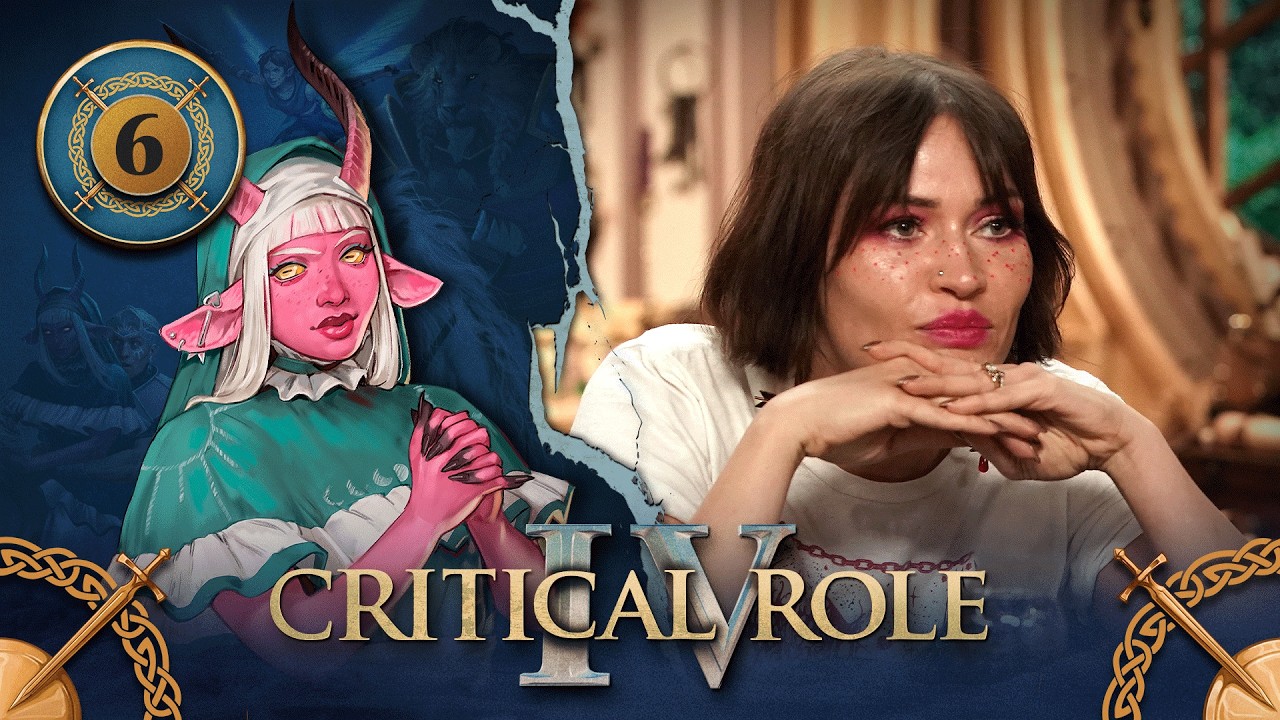
A cohesive Soldiers-focused episode where faith, identity and memory become choices, culminating in one of Campaign 4’s strongest actual-play finales.
What worked & what held it back
- Wicander’s faith develops through a risky mechanical choice rather than a simple rejection of belief
- Tyranny’s demonic nature becomes a meaningful conflict between impulse and responsibility
- Thimble’s memory bargain gives grief a painful and tangible cost
- Hawthorn’s Glade turns survival into a genuinely difficult moral problem
- The wraith-tree finale pays off earlier gifts, theology and character choices at once
- Hawthorn’s Glade introduces a dense cluster of new characters, lore and magical concepts
- Cyd remains one step ahead, so the pursuit advances mostly through testimony rather than confrontation
Warning: This review contains full spoilers for Critical Role Campaign 4, Episode 6.
The literal hag is the person arguing that Hawthorn should stop sending people to an undead murder tree.
That tells us quite a lot about Episode 6.
The demon is horrified by her own impulse to cause suffering.
The believer discovers that his Light can make flowers grow instead of enemies burn.
The beautiful fairy sanctuary survives partly because the dead murder anyone who gets too close.
And the creature made of shadow was once a cleric waiting for the paradise its faith promised.
Episode 6 has very little patience for appearances.
Campaign 4 has spent several episodes breaking the categories its characters inherited: noble and rebel, believer and fraud, alive and dead, person and object.
The Soldiers now encounter another version of the same problem.
What remains when a name, nature or institution stops being enough to tell you who somebody is?
Sometimes the answer is choice.
Sometimes it is memory.
And sometimes it is the uncomfortable discovery that the thing you believed made you good was never capable of making that decision for you.
Tyranny Learns What She Is Supposed to Be
Episode 6 begins the Soldiers’ journey with a kitchen knife.
Not a legendary sword.
A kitchen knife.
An old family relic whose deepest importance came from feeding people rather than fighting them.
The knife belonged to Ulbid Morn’s late wife, Jasavi. Her family carried it from the old City of Stars, and Ulbid describes it as one of the few possessions to survive from before the fall of the goddess of magic.
Its history is considerable.
Its purpose remained wonderfully domestic.
Ulbid uses it to slice dried fruit for breakfast.
That matters.
He talks about mystics who dismiss material things beside whatever part of existence is eternal, then admits that he loves this object because Jasavi loved it.
Tyranny steals it.
At first, this feels like the inevitable punchline to Whitney Moore spending breakfast interrogating an elderly widower about his dead wife.
Then they leave.
The knife grows warm.
Red mist moves from Tyranny into it.
She sees Ulbid tearing his home apart, frightened that he has lost another piece of the family already missing from it.
And something ancient in Tyranny answers.
Her siblings.
Then the instruction attached to what she is:
“Suffering is your domain.”
Episode 6 is careful about what this proves.
Tyranny does not suddenly receive a complete explanation of demonic metaphysics.
What she experiences is an impulse toward suffering that she does not entirely recognise as her own — and the frightening possibility that whatever archetype she has not yet fulfilled may be connected to the freedom she wants.
She stole from a man she liked.
She knows it hurt him.
She does not want that.
That is the important part.
Tyranny has spent much of Campaign 4 insisting that demon does not simply mean evil.
Now the campaign makes that argument harder.
If demonic nature really does exert pressure on her, being good cannot merely mean discovering that the pressure was imaginary.
It may mean choosing against it.
Kattigan is furious when she confesses.
He takes the knife from her.
But beneath the anger, his position is surprisingly useful:
“I understand what you are, but your actions are your actions.”
That could sound cruel.
For Tyranny, it may eventually become liberating.
An archetype can explain an impulse.
It does not have to become permission.
The sequence then gets a wonderfully strange resolution.
Kattigan keeps the functional blade while sending the ornate heirloom portion back to Ulbid with Wulferic.
Ulbid responds to its return with extraordinary generosity.
Searching for the missing knife forced him back into memories of Jasavi he had drifted away from. Those memories hurt.
They were still worth recovering.
And he hopes the blade will continue doing what Jasavi used it for:
feeding and caring for people.
An act born from suffering ends with an old man asking that part of it be redirected toward care.
Episode 6 could hardly state its argument more neatly.
Wicander Discovers That Real Light Does Not Make Him Right
Wicander gets his strongest episode of Campaign 4 so far.
The Soldiers accidentally enter a fight with the defenders of Hawthorn’s Glade.
Honeysuckle uses sleep magic.
Tyranny wakes Wicander by kicking him, which is not yet an officially recognised sacrament of the Candescent Creed but has demonstrable practical value.
Teor responds to danger as Teor generally does and blasts Honeysuckle unconscious with radiant magic.
Then Skinner arrives wearing cold-iron boots and begins explaining, largely through violence, why redcaps have the reputation they do.
The important part is what happens next.
The players begin trying to stop the fight rather than win it.
Kattigan races to Honeysuckle and stabilises her.
Thimble tries to establish kinship.
And Brennan Lee Mulligan offers Sam Riegel a mechanical choice.
Wicander can use Persuasion.
He is better at Persuasion.
Or he can roll Religion and ask a much stranger question:
Can the Light do something he was never taught to use it for?
Sam chooses Religion.
The worse modifier.
The better character choice.
Wicander reaches for one of the teachings he has carried since childhood:
“What you beam, you become.”
He remembers his mother, Iris, comforting a frightened young Wick and teaching him that darkness does not have to be answered with more darkness.
Then the Light answers.
Plants bloom.
The shambling mound grows.
Hawthorn’s magic strengthens.
Radiant wings spread behind Wicander.
Brennan describes a dead sun god and a sun that continues shining.
Then:
“Forms break, titles change, but truth remains forever.”
That would already be one of Campaign 4’s best Wicander scenes.
What makes the episode better is that it refuses to let him misunderstand what happened.
Wicander has not proved the Candescent Creed correct.
He has proved that the power he calls Light can be real even when the institution built around it is fraudulent.
Those are different claims.
House Halovar treated belief as a tool.
Wicander is beginning to discover that the tool can be used for something its creators did not intend.
Then Hawthorn’s Glade makes him confront the other side.
A fairy scholar sees the Candescent Creed insignia Wicander still carries and immediately moves children away from him.
Wicander is confused.
The Creed has been associated with discouraging older customs: leaving bread and milk for small folk, maintaining protective charms and treating fairies with forms of reverence that some Creed teachings can be used to condemn.
Wicander’s instinct is to object.
That is not what those teachings mean.
Then he catches himself.
More precisely:
That is not what those teachings mean to him.
That distinction is brutal.
Wicander’s sincerity matters.
It does not erase consequence.
He can reclaim his own faith.
He cannot demand that people harmed by the institution recognise his private version as the authentic one.
The Light being real does not automatically make Wicander right.
Hawthorn’s Glade Survives by Making the Wrong Choice for Understandable Reasons
Hawthorn’s Glade initially looks like the sort of place a fantasy campaign visits shortly before everyone gets flower crowns.
The impression does not survive inspection.
The Glade is genuinely beautiful.
A huge flowering hawthorn.
A crystalline lake.
Pixies, sprites and satyrs.
Children born after Faerie closed.
A moon crystal powering the magical protections on which the settlement depends.
Then Brennan moves past the colour.
Broken wagons.
Sick fairies.
Soot around mouths and throats.
People who have spent too long living somewhere incompatible with what they are.
Almost everyone seems to have arrived at the edge of catastrophe.
And somewhere around eighty to a hundred fairies now depend on Hawthorn keeping this one sanctuary viable.
That context is essential because Hawthorn has made a terrible decision.
It is also not a stupid one.
The wraith tree animates corpses throughout the surrounding forest after dark.
Those undead make the wilderness sufficiently dangerous that larger mortal communities are less likely to penetrate deeply enough to discover the Glade.
That helps Hawthorn’s refugees survive.
So Hawthorn has accepted the dead killing people outside her sanctuary because the horror creates space in which her people can continue living.
Cyd was sent toward that tree.
The fear behind the decision is genuine.
Hawthorn even warns Thimble about another kind of danger:
“We will forget who and what we are. The door’s shut.”
That line matters.
Faerie has closed.
Fairies are stranded.
They are adapting to places that damage them physically and cultures that may gradually alter them in other ways.
Hawthorn is not merely protecting bodies.
She believes she is protecting identity.
That does not make the wraith tree good.
It makes the compromise understandable.
Sallow still thinks it is wrong.
The contrast is wonderfully constructed.
Sallow rises from the water looking like every warning ever given to a child about wandering into a swamp.
She is a hag.
She does not object to being associated with darkness.
She objects to the idea that darkness makes her less fae.
Then she looks at what beautiful, luminous Hawthorn has accepted and names it:
a devil’s bargain.
The interesting distinction is not that Sallow is secretly good and Hawthorn secretly evil.
That would simply replace one lazy moral category with another.
Hawthorn is responsible for dozens of displaced people with almost nowhere else to go.
Her fear is legitimate.
Her calculation makes sense.
It is still a terrible calculation.
Necessity can explain a compromise without cleansing it.
Episode 6 keeps returning to that distinction.
Wicander’s faith can contain truth without making its institution innocent.
Tyranny’s nature can exert pressure without dictating her choices.
Hawthorn can sincerely protect vulnerable people while allowing other vulnerable people to die.
Moral complexity here does not mean nobody is responsible.
It means responsibility survives explanation.
Cyd Was Looking for Teor Too
For all the theology, Episode 6 remembers that the Soldiers came into these woods for Cyd.
And what they learn gives Teor something more meaningful than another set of tracks.
Cyd reached Hawthorn’s Glade before them.
He intended to continue toward Gormalay and challenge the stronghouse deed now connected to Casimir because he believed it had been acquired through murder.
Afterward, he planned to travel east.
Because he was looking for Teor.
That is the important part.
Teor has spent the journey wondering whether the brother he remembers still exists.
He has admitted that years passed and that he no longer knows what Cyd values, what motivates him or how accurately the man in his memory resembles the one he is chasing.
Now he discovers that Cyd has been asking the same geography to produce him.
The brothers are not simply separated.
They are looking for each other from opposite directions.
That gives Teor’s pursuit an emotional clarity it previously lacked.
Cyd is not merely the person who may explain what happened during Thjazi’s rescue.
He is Teor’s brother trying to find his way back to him.
Unfortunately, Hawthorn sent him toward the wraith tree.
Soobri’s vision makes the danger worse without pretending to settle it.
She sees Cyd beyond the forest, then crow imagery, captivity and movement along a road.
But she cannot determine whether the vision represents something already past or something still ahead.
That distinction matters.
Episode 6 gives the Soldiers something to race against.
It does not give them confirmation that Cyd has already been captured.
The episode also introduces Jauf, a wounded bowka whose connection to Thjazi runs through the Archanade.
Jauf carries another piece of Thjazi’s compartmentalised work: a letter meant to reach Thimble.
He explains that Thjazi deliberately kept people involved in his work at a distance from one another so that if one part of the network collapsed, fewer others would fall with it.
The letter stays unopened.
For once, Thjazi manages to introduce a mystery without immediately forcing three more people to bleed over it.
Progress.
One Character Remembers So She Does Not Lose Herself. Another Pays by Forgetting.
Episode 6’s cold open initially seems far removed from the Soldiers.
Vaelus remembers sunlight.
Her siblings Maywyn and Arthas.
A childhood game.
Bare feet across moss.
Flowers appearing behind her as she runs beneath the gaze of Sylandri, her mother and the goddess of life.
Then Sylandri teaches her something.
A perfect moment is worth deliberately preserving.
Elven life is long.
Centuries wear things down.
Memory requires effort.
Vaelus has returned to that particular day in her trance every single night.
The point is not nostalgia.
It is continuity.
If enough pieces disappear over enough centuries, what remains of the person who lived them?
Brennan’s warning is simple:
You cannot forget who you are.
Hawthorn fears essentially the same thing for her people.
The doors to Faerie are shut.
The longer fairies remain in the mortal world, the more she fears they may forget who and what they are.
Then Thimble pays Sallow with exactly that currency.
Sallow does not want money for information about Cyd.
She wants a memory of somebody Thimble loved.
Kattigan immediately understands that the price is more serious than gold.
In Thieves’ Cant, he tells Thimble to tell him the memory too.
If she loses it, he intends to preserve it for her.
Thimble chooses something painfully small.
Why she called Thjazi Thaz.
He taught her to read and write.
She struggled with the shape of the J in his name.
So she shortened it.
Thjazi complained.
Then accepted that this one strange little name could belong to the two of them.
Sallow takes the memory.
That is much crueler than taking campaign lore.
Thimble does not forget Thjazi.
She loses one of the tiny details that made her Thjazi different from everyone else’s.
Campaign 4 has understood from Episode 1 that grief is built out of specificity.
Thirteen people did not mourn the same man.
Sallow removes one piece of Thimble’s version.
Then Kattigan tells her he will not let her forget.
Thimble no longer knows what he means.
The cold open suddenly becomes part of the same story.
Vaelus spends centuries deliberately rehearsing a memory because it helps preserve who she is.
Hawthorn fears an entire displaced people gradually forgetting themselves.
Thimble discovers that one private part of identity can simply be taken away.
One character treats remembering as survival.
Another learns that forgetting can be a wound.
For the Soldiers, Casimir’s Betrayal Is No Longer Just a Theory
Sallow does at least pay fairly.
What Thimble receives in exchange substantially changes what the Soldiers themselves know about Thjazi’s death.
She sees a memory of Casimir seated across from an unidentified person.
A large bag of gold.
A scroll.
The unseen speaker makes clear that Casimir’s cooperation has been purchased.
Casimir responds with open contempt for Thjazi and anticipates his execution with satisfaction.
That is a major evidentiary shift.
Brennan’s opening recap already describes Casimir as responsible for Thjazi’s death and explicitly refers to his betrayal.
But the Soldiers have spent the campaign piecing together their own case.
The false rescue.
Casimir’s disappearance.
His sudden access to wealth.
The Gormalay stronghouse.
The Crow Keeper connections.
The Tachonis-backed caravan heading north.
Now Thimble has direct in-world evidence of Casimir accepting payment while anticipating Thjazi’s execution.
The conspiracy is not solved.
The payer remains unidentified.
The contents of the scroll remain unknown.
We still do not know the complete terms of Casimir’s agreement or exactly how the wider plot was organised.
But for the Soldiers, the central mystery has changed.
The question is no longer primarily:
Did Casimir betray Thjazi?
It is becoming:
Who bought him, and what exactly did they buy?
That is good mystery progression.
Answers should not merely close doors.
The best ones tell us which door is actually worth opening next.
The Wraith Was Promised Paradise Too
The final battle completes Wicander’s argument without resolving it.
Mechanically, it is one of Campaign 4’s strongest encounters so far.
Almost everything matters.
The undead are not a finite pile of hit points.
More corpses keep rising.
The wraith can kill Wicander frighteningly quickly by draining his life and reducing his maximum health.
Shield prevents one attack that would have put him in immediate danger.
Ulbid’s enchanted toy sword — created to protect Cerebel from haunts, dreams and nightmares — turns out to deal additional damage to incorporeal creatures.
Nobody knew that property would matter when the sword was given away.
Now Thimble drives a child’s nightmare ward into a wraith and fireworks explode from its skull.
Actual play occasionally produces images scripted drama would be embarrassed to invent.
Kattigan and Wulferic show more of their combat partnership.
Teor’s radiant attacks tear into the wraith.
And Wicander pours almost everything into Halovar’s Luminous Lash to pin it in place.
Then Sam explains what Wicander believes he is doing.
His life has been organised around a simple moral language.
Light.
Shadow.
Good.
Something made of darkness stands in front of him.
Therefore Light should burn it away.
The wraith answers:
“I was promised paradise, too.”
The Light reveals an ancient holy symbol.
A cleric.
A believer.
Someone who has spent centuries scraping across existence trying to reach an afterlife it trusted would be there.
This is the perfect second half to Wicander’s miracle.
Earlier, Episode 6 proves to him that his faith can be real.
Now it proves that being real is not the same thing as being sufficient.
The wraith believed too.
Sincerely.
That sincerity did not save it.
And Wicander cannot dismiss the problem by declaring the creature faithless.
Its faith is part of what makes the condition tragic.
Campaign 4 is not pushing Wicander toward easy disbelief.
That would almost be merciful.
It is forcing him to develop a faith capable of surviving evidence.
That is much harder.
Teor eventually destroys the wraith.
Then the deeper problem reveals itself.
A red rune appears in the tree.
Wicander understands that the tree is effectively functioning as a conduit into Death.
Kill the creature and the tree begins calling the same wraith back.
The enemy is therefore not merely the thing attacking them.
It is the structure sustaining the horror.
Campaign 4 apparently cannot resist giving even its undead an institutional problem.
“Welcome Home” Means Something Different Now
So the Soldiers burn the system.
Kattigan throws oil across the battlefield.
Thimble catches it.
She moves toward the wraith tree.
Inside its dead growth are animal bones, human remains and desiccated gossamer wings.
She strikes the fire.
Then the little sword Ulbid gave her answers.
The toy once belonged to Cerebel.
It was enchanted by a father who wanted his daughter to feel safe from nightmares.
Ulbid has spent more than fifteen years keeping another message ready for Cerebel and her sisters.
WELCOME HOME.
The sword sends those words across the burning tree in fireworks.
The undead fall still.
Episode 5 used that phrase as hope for the missing living.
Episode 6 turns it into release for the dead.
That is enough.
Except for one detail.
Thimble checks the bodies.
Cyd is not there.
The Soldiers save people they did not come looking for.
The person they came to save is still somewhere ahead.
Episode 6 Makes the Soldiers Feel Like a Party
Episode 6’s biggest structural advantage over Campaign 4’s opening chapters is simple:
it stays put.
After the Vaelus and Occtis cold open, the episode belongs to the Soldiers.
That gives choices time to echo.
Tyranny’s fear about what she is becomes relevant to Wicander asking what belief means.
Wicander’s nurturing Light becomes relevant when he later confronts the institutional history attached to it.
Hawthorn’s fear of her people forgetting themselves echoes Vaelus’s deliberate remembering and Thimble’s involuntary forgetting.
Ulbid’s toy sword matters hours after it is given away.
Cyd’s trail leads to Thjazi’s unfinished network.
Thimble’s grief produces both a personal loss and the strongest direct evidence the Soldiers have received against Casimir.
Then almost all of those threads converge around the wraith tree.
That cohesion is the reason Episode 6 deserves the jump back to 9/10 after Episode 5’s 8.5.
There is still a weakness.
Hawthorn’s Glade introduces a lot.
Hawthorn.
Honeysuckle.
Skinner.
Soobri.
Sallow.
Jauf.
The moon crystal.
Refugee history.
Fairy customs.
Cyd’s passage.
The wraith tree.
Another Thjazi letter.
At moments, the middle of the episode starts to feel like the party has entered a very attractive directory of future Subject pages.
Most of those elements eventually earn their place.
But the density is real.
Cyd also remains one step ahead, meaning the pursuit advances largely through people telling the Soldiers where he has already been.
Episode 6 gets away with that because the people they meet are not merely clue dispensers.
Their problems force the Soldiers to make decisions.
That distinction matters.
The quest for Cyd keeps producing stories worth stopping for.
Verdict
Critical Role Campaign 4 Episode 6 is the first real demonstration of why dividing the enormous ensemble into smaller groups was the right decision.
The Soldiers do not merely receive more screen time.
They get continuity.
Whitney Moore turns Tyranny’s demonic nature from a running contradiction into something genuinely frightening without surrendering the character’s insistence that nature is not destiny.
Sam Riegel gives Wicander the episode’s central transformation by choosing the riskier mechanical option because it asks the truer character question.
His Light becomes more real at exactly the moment his certainty about what that reality means becomes less secure.
Travis Willingham lets Teor’s pursuit change once he learns that Cyd has been looking for him too.
Robbie Daymond gives Kattigan an increasingly important role as the person who may not speak gently but understands responsibility, survival and the practical value of remembering something for someone who cannot.
Laura Bailey gives Thimble the episode’s most painful bargain by sacrificing something that would be meaningless to almost anyone except her.
And Brennan Lee Mulligan constructs two combats that actually advance the episode’s argument.
The first ends because the characters choose to stop treating opponents as enemies.
The second becomes more complicated because Wicander still believes darkness is enough to identify one.
That difference is the episode.
Tyranny is a demon.
Sallow is a hag.
Hawthorn protects refugees.
Wicander carries Light.
The wraith was a cleric.
None of those facts are meaningless.
None of them finish the moral sentence.
Even memory is unstable.
Vaelus has to practise remembering herself.
Hawthorn fears her people may forget what they are.
Thimble discovers that part of a relationship can simply be taken away.
Wicander discovers that a teaching can survive the institution that abused it.
Tyranny discovers that an inherited nature can demand something she does not want to become.
Episode 6 keeps stripping away every shortcut these characters might use to tell themselves who they are.
Then it leaves them with the harder answer.
Choice.
Forms break.
Titles change.
What survives them has to be lived.
Score: 9/10
Sources
Enjoyed this article?
Supporting Rolling Realm helps fund more independent reviews, lore guides and spoiler-aware coverage. Every article remains free.
Critical Role Campaign 4 Episode 2 Review: There Are No Bygones
Campaign 4 starts digging beneath family, faith and old loyalties — and discovers that nothing inherited comes without a history.
Episode 2 turns old loyalties, inherited authority and House Halovar’s hidden machinery into active threats as Thjazi’s sabotaged escape begins to take shape.
What We Learned from Critical Role Campaign 4, Episode 3
Cut threads, quiet threats and the shadow behind the shears
Episode 3 exposes the manufactured Candescent Creed, sends a new party towards Gormalay and ends with House Tachonis tearing its way into Palazzo Davinos.
Critical Role Campaign 4 Episode 7 Review: Power, Betrayal and One Terrible Castle
“On the Scent” turns a hunt through Timmony into a study of borrowed authority, as Wicander wrestles with inherited status and Casimir discovers how little respect betrayal actually bought him.
A slow-burning but rewarding episode that uses Timmony, the Candescent Creed and Castle Sloak to explore power, legitimacy and the humiliating limits of Casimir Gavendale’s new status.
Critical Role Campaign 4 Episode 5 Review: Somewhere to Return To
After certainty collapses, Campaign 4 sends its characters looking for new directions — and discovers that moving forward does not always mean leaving the past behind.
A strong transitional chapter that turns the Overture’s consequences into direction while finding emotional weight in Occtis’s undeath, chosen trust and the families still waiting for someone to come home.
Critical Role Campaign 4 Episode 7 Review: Power, Betrayal and One Terrible Castle
“On the Scent” turns a hunt through Timmony into a study of borrowed authority, as Wicander wrestles with inherited status and Casimir discovers how little respect betrayal actually bought him.
A slow-burning but rewarding episode that uses Timmony, the Candescent Creed and Castle Sloak to explore power, legitimacy and the humiliating limits of Casimir Gavendale’s new status.
Critical Role Campaign 4 Episode 9 Review: The Oath Still Stands
The Soldiers follow Cyd into Tybry’s Lea and discover that when gods, revolutions and institutions fail, what matters is not preserving their old shape — but deciding which promises still deserve to survive.
A dense but rewarding episode that uses Timmony’s Hounds, the Candescent Creed and House Tachonis to ask what deserves to survive when old systems fail.