What We Were Made For
The Overture ends with a massacre, an impossible return from death and Campaign 4's clearest argument yet that origin does not have to become destiny.

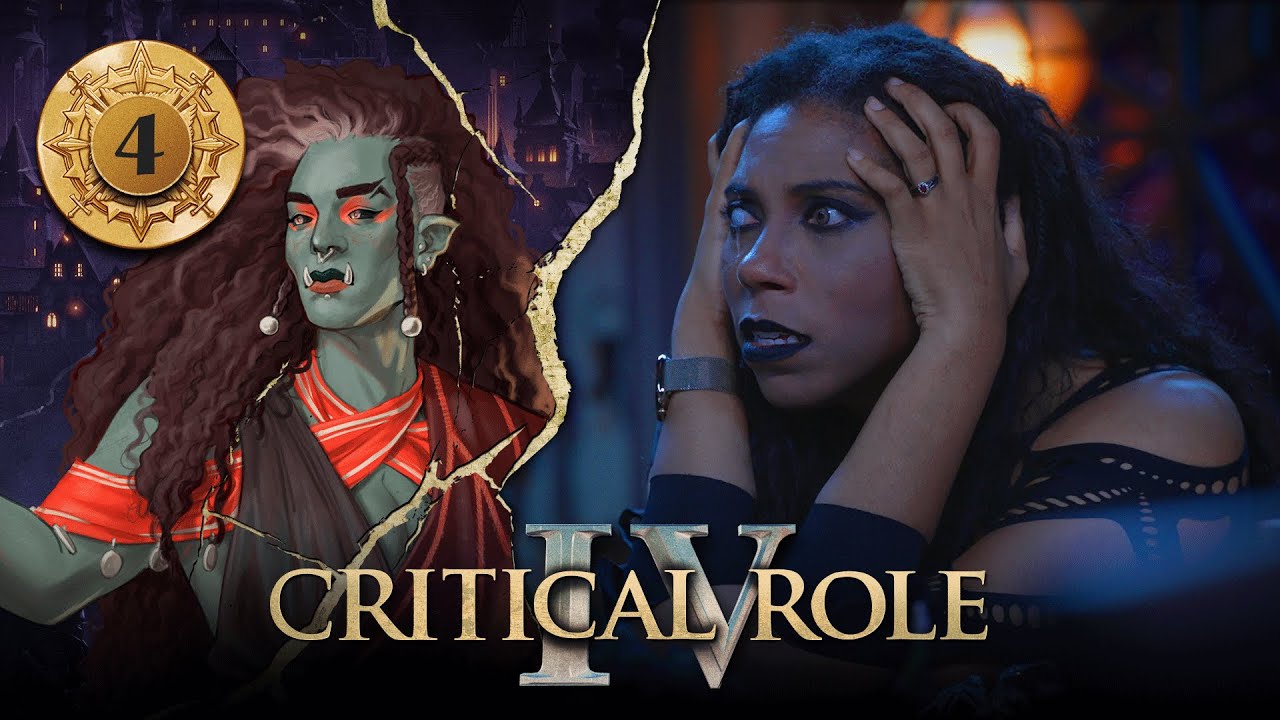
Campaign 4's strongest Overture episode turns an unfair massacre, Occtis's impossible return and Bolaire's identity reveal into a coherent argument about origin, ownership and choice.
What worked & what held it back
- House Tachonis's assault makes institutional power mechanically real
- Occtis's death and altered return turn the campaign's cosmology into character drama
- Thaisha's conflict with the Old Path gives faith genuine emotional friction
- Bolaire's identity reveal deepens both their personhood and Thjazi's complicated legacy
- Murray's Portent turns a DC 30 check into exceptional actual-play storytelling
- Aranessa closes the Overture with one of the campaign's strongest statements of resistance
- The final movement stacks major revelations faster than some of them can breathe
Spoiler warning: This review discusses Critical Role Campaign 4 Episode 4, Stone-Faced, in full.
Episode 4 kills Occtis Tachonis.
Then it spends the rest of its runtime arguing over who gets to decide what he is.
His family thinks the answer is obvious.
House Tachonis gave him a name, a bloodline and an inherited relationship with death. When Occtis fails to become the kind of son they expected, they do not merely reject him. They attempt to reclaim him.
Thaisha Lloy has another answer. Her faith teaches that death belongs to a natural cycle that should not be resisted when the proper time arrives.
Then somebody she loves dies, and suddenly doctrine has competition.
Bolaire Lathalia has spent centuries confronting an even more literal version of the same problem. They were created for one purpose: become a weapon, wear bodies, kill a god.
The war ended.
Bolaire did not.
And Murray Mag'Nesson, armed with a natural 20 that looks suspiciously like fate, receives perhaps the episode's most important cosmological lesson:
It is not destiny.
That makes Episode 4 the strongest chapter of Campaign 4's Overture because several stories that have appeared separate suddenly begin asking the same question.
How much authority does your origin have over what you become?
The answer, increasingly, is:
Less than the people who made you would like.
House Tachonis Does Not Bring a Fair Fight
Episode 3 ended with House Tachonis finally becoming operational.
Episode 4 shows what that actually means.
The Tachonis assault on Palazzo Davinos is not structured like a group of villains arriving to provide the players with a satisfyingly manageable combat encounter.
It is an extermination.
General Raimond Davinos is already dead.
Ethrand Tachonis has Occtis restrained upstairs.
Tachonis ghouls move through Palazzo Davinos.
The restless dead beyond Palazzo Davinos are crowding the barrier between worlds.
Then Lord Primus Tachonis casts Circle of Death at 6th level.
Thaisha and Julien Davinos both make their Constitution saves and still take 21 damage. The people around them are considerably less fortunate. Guards, retainers, courtiers, servants and others throughout the palazzo simply drop.
Primus then announces the political objective with remarkable efficiency:
Davinos.
Royce.
Their vassals.
Tonight they end.
There is something important about Brennan Lee Mulligan allowing House Tachonis to feel this unfair.
Campaign 4 has spent three episodes explaining that these families possess extraordinary inherited power.
Eventually, that power has to become more than a title and some intimidating heraldry.
Here it becomes mechanical reality.
Julien can stab Primus with what should be a devastating blow and discover that the man keeps moving.
Thaisha can race through the palace looking for Occtis while the encounter continues deteriorating around her.
Vaelus can withstand tremendous amounts of necrotic punishment because of what she is, without that making the situation remotely comfortable.
Nobody gets to assume the world has scaled itself politely to their level.
That creates one of Campaign 4's best fights because the objective quickly stops being:
How do we win?
It becomes:
What can still be saved?
Aranessa understands that faster than almost anyone.
She breaks free, calls for guards and batterymen, fights back, works with Thaisha to find where the dead are weakest and ultimately uses Tree Stride to get survivors — and Occtis's body — out of the palazzo.
The noblewoman introduced partly through the wreckage of her relationship with Thjazi Fang suddenly becomes one of the most competent people in the episode.
And she needs to be.
Because House Tachonis has not come to threaten her family.
It has come to erase it.
Occtis Dies Because His Family Thinks He Belongs to Them
The ugliest thing House Tachonis does is not killing Occtis.
It is explaining why.
Ethrand tells his younger brother that the Tachonis name itself should have been regarded as a gift, despite the family believing there has always been something wrong with him.
Then he plunges the Stone of Nightsong into Occtis and reaches for his heart from inside his body.
The damage is so extreme that Brennan explicitly bypasses death saving throws.
Occtis is simply dead.
That distinction matters.
There is no failed-save sequence for the table to desperately reverse.
No natural 20 waiting to put him back on one hit point.
His own brother kills him.
Then House Tachonis takes his heart.
If that were the end of the family's claim over him, it would already be grotesque enough.
It is not.
Occtis has spent his life believing that his family understands death.
The Tachonis were stewards of passage. Whatever else was wrong between him and his relatives, he expected their inherited knowledge to mean something when his own time came.
Instead, Ethrand promises to remove even his Path from the beyond, and Primus's influence follows Occtis into death itself.
A bloody hand holding a heart reaches from somewhere beyond the proper forest path and commands him to come home.
It is difficult to make familial possessiveness more literal than your father trying to drag your soul out of the normal afterlife while holding your stolen heart.
House Tachonis does not merely believe Occtis owes them loyalty while alive.
They treat blood as jurisdiction.
Even death does not end the contract.
That makes the question of what House Tachonis wants with Occtis much less abstract, even if the family's larger plan remains unresolved.
Which makes Occtis's response the episode's clearest statement of selfhood.
As the pull begins tearing his soul apart, he tries to stitch himself back together and tells his father:
“I don't belong to you. I belong here, with them.”
The fact that he has to make that declaration after being murdered by his brother is merely House Tachonis being thorough.
But the line lands because Occtis is not claiming that his family has nothing to do with him.
Of course they do.
Their history shaped him.
Their expectations hurt him.
Their relationship with death influenced what he eventually studied for himself.
He simply rejects the conclusion they draw from all of that.
You helped make me does not mean you own me.
Episode 4 keeps returning to that distinction.
Thaisha Finds the Limit of Her Own Faith
Thaisha's material is even better because the episode does not give her an easy ideological answer.
It gives her a feeling.
During the escape from the palazzo, Thaisha is knocked unconscious.
Her first death saving throw is a natural 1.
Two failures immediately.
At the edge of death, she sees Occtis walking away through the forest toward renewal and new life.
This should be familiar territory for her.
The Old Path is not built around defeating mortality. Thaisha explicitly understands its teaching as accepting the cycles of life and refusing to fight when someone's proper time has come.
She knows what she is supposed to believe.
Then she looks at Occtis and knows something else.
It is not his time.
So she screams after him:
“Go back! Not yet.”
That ordering is important.
Thaisha does not first arrive at Occtis's corpse and intellectually decide that this particular death deserves an exemption.
She reaches the edge of death herself.
She sees exactly what her religion says should happen.
And her immediate response is no.
Only afterward is Thaisha healed and returned to the living world.
Then she fights her way back to Occtis.
When she finally reaches his body, she positions herself at his head in a way Brennan explicitly compares to the rites she gave Thjazi.
Except the prayer has changed.
Instead of helping the dead move onward, Thaisha tells Occtis to follow her voice.
To come back.
To get off the Path.
Brennan immediately presses the contradiction.
Why could Thaisha tell Thjazi that another life waited beyond the forest, yet refuse to say the same thing to Occtis?
Aabria Iyengar does not invent a sudden theological loophole.
Thaisha does not deliver a speech about how she has reinterpreted centuries of spiritual tradition.
She says she does not want to think about it.
“This is just feeling.”
That is much stronger.
Faith is easy to describe when it remains general.
It becomes harder when doctrine has somebody's face.
Thaisha does not abandon the Old Path here.
She discovers that loving someone may force her to ask where its boundaries actually are.
Thjazi died.
She helped him onward.
Occtis dies.
She tells him to turn around.
The contradiction is unresolved because it should be.
Campaign 4 does not need Thaisha to solve her faith four episodes into the story.
It needs her to encounter something that makes the solution harder.
Bolaire Was Made for a War That Already Ended
Then there is Bolaire.
Episode 4's cold open has already made it clear that whatever is beneath the mask is stranger than the body wearing it.
Aubrus Drime removes Bolaire's mask from what appears to be a dying body, sees the rune within it, becomes enchanted and puts the mask on.
Bolaire wakes looking through Aubrus's body at the one they previously inhabited.
Then Bolaire chops up the old body and burns most of it.
As introductions to someone's true nature go, it is admirably difficult to misinterpret.
Later, Halandil Fang finally demands plain language.
After hundreds of hours spent talking about literature over coffee, after Bolaire has watched Shadia perform, after friendship has made evasiveness harder to justify, Hal asks the obvious question.
What are you?
Bolaire's answer radically expands one of Campaign 4's longest-running mysteries.
Bolaire is not simply somebody wearing a magical mask.
Bolaire is the mask.
They were created during the Shapers' War as a weapon intended to help kill Rauwyn the Trickstar.
The mask wears bodies.
When it is not worn, it sleeps.
For generations it woke when somebody needed the function for which it had been created.
Then, during the Falconer's Rebellion, something changed.
Bolaire had a thought that had not been placed there by its creators.
They realised the play they had been written for was already over.
And eventually they left.
Taliesin Jaffe has been playing Bolaire as theatrical from the beginning.
Episode 4 finally reveals how literal that metaphor is.
Bolaire understands their life as a character whose original script ended centuries ago.
They were created for a role.
The role was completed.
The character remained.
That is why the Archanade matters so much.
Bolaire found something they were good at that was not what they had been made for.
Then Hal's theatre gave them something even stranger.
Desire.
Bolaire tells Hal that knowing him made them capable of wanting to become more.
That is an extraordinary way to frame personhood.
Not as a revelation that Bolaire secretly possessed some conventional mortal soul all along.
Not as a magical transformation.
As the gradual discovery that purpose can be chosen after purpose has been assigned.
And then the episode complicates Thjazi again.
Bolaire tells Hal that Thjazi discovered information which, if exposed, could make Bolaire's life unbearable.
Thjazi told Bolaire they had to work for him.
Bolaire says he forced them to steal from the Archanade for himself and others, and threatened that telling Hal would mean the end of Bolaire.
Bolaire believed Thjazi's death might finally mean freedom from that arrangement.
That lands hard because Campaign 4 has spent so much time showing us Thjazi through people who loved him.
Episode 4 does not invalidate any of that.
It adds another person.
And Bolaire's version of Thjazi is ugly.
When Murray asks why Thjazi hated Bolaire, Bolaire corrects her.
He did not hate them.
He thought they were a thing.
Useful.
Not real.
That may be the most uncomfortable Thjazi revelation yet.
This is a man remembered as a revolutionary, mentor and defender of people who had been treated as disposable by more powerful systems.
Yet when faced with a form of personhood he apparently did not recognise as fully real, he exploited it.
The contradiction should remain a contradiction.
Campaign 4 becomes less interesting if Thjazi eventually resolves into either secret saint or hidden monster.
A man can spend his life fighting systems that instrumentalise people and still fail to recognise when he is doing something similar himself.
Episode 4 also pushes the mystery inside the Coffin of Olbalad in a new direction.
There are more masks.
Bolaire calls them brothers and sisters and says they have not been found.
Brennan immediately reminds Hal of the Black-Clay Mask recovered from the Coffin of Olbalad and of Thjazi's line about what might happen if someone took Bolaire's mask off.
The episode is very clearly inviting a connection.
It is not confirming one yet.
That restraint matters.
We now know other masks exist.
We know a shattered mask has already entered Thjazi's mystery.
We do not yet know exactly what relationship those facts have.
For once, Campaign 4 gives us permission to be suspicious without giving us permission to write the wiki entry.
Murray's Natural 20 Is About Choice, Not Fate
Then Marisha Ray gets to turn a class mechanic into cosmology.
Murray's Portent roll has been sitting in the episode waiting to matter.
When the group discovers the Stone of Nightsong inside the place where Occtis's heart should be, removing it requires a DC 30 Medicine check.
Bolaire makes the check.
Hal supplies Bardic Inspiration.
Thaisha supplies Guidance.
Murray supplies the impossible part.
She applies her stored natural-20 Portent.
The collaboration matters.
Murray does not simply press a wizard button while everyone watches.
Several characters contribute to an act that Brennan describes as something that goes wrong in almost every possible version except this one.
The Stone comes free.
Nightingales call.
And the group discovers they have not merely removed an artefact.
They have prevented and repaired enormous magical mistakes they did not even know existed.
This could very easily become a story about destiny.
The diviner had already seen the successful roll.
Therefore this moment was always supposed to happen.
Therefore everyone was always supposed to be here.
Therefore fate has selected its heroes.
Brennan refuses that interpretation almost immediately.
Portent is not destiny.
Time moves forward.
But sufficiently important events carry such weight that their consequences can ripple backward through that stream, allowing a diviner to perceive something before it happens.
The future can matter enormously without being compulsory.
That is a wonderful piece of actual-play worldbuilding because it makes the mechanic feel metaphysically important without destroying agency.
Murray does not see the future because the universe has written the script.
She catches the echo of a decision important enough to be heard before anybody makes it.
Brennan similarly describes this collection of people as being here not because a god arranged it and not because some plan demanded it.
They were supposed to be here if and only if they wanted the city to be saved.
That is the entire episode in miniature.
Origin without obligation.
Possibility without compulsion.
A future significant enough to reach backward without becoming a command.
House Tachonis thinks inherited purpose is ownership.
Murray's magic suggests something much more interesting.
Meaning does not require inevitability.
Episode 4 Almost Has Too Much Ending
There is one substantial criticism.
Episode 4 eventually starts behaving as though somebody has told it there are only thirty minutes of Campaign 4 left forever.
The Stone comes out.
The nature of Portent is explained.
Occtis returns.
His new physical state is established.
Bolaire's true nature has just been revealed.
The existence of other masks has been revealed.
Thjazi's relationship with Bolaire has been radically reframed.
The Stone's magical significance escalates.
Occtis receives visions of an underworld war.
Vaelus confronts something unprecedented.
Julien turns on Occtis.
Thaisha walks into his sword.
Aranessa gives the political statement that closes the Overture.
Any two or three of those developments could comfortably anchor the ending of an episode.
Episode 4 decides to use all of them.
Mostly, it works because the material is excellent.
But there are moments when one revelation barely has time to finish landing before another one arrives carrying luggage.
Bolaire's confession in particular could sustain a tremendous amount of aftermath. Hal learning what Thjazi did to his friend should change the temperature of the room for longer than the episode can currently afford.
Occtis's return is similarly enormous.
Everyone has watched a dead man get back up without his heart.
This is the sort of event one might reasonably spend the rest of the evening processing.
Campaign 4 gives them several minutes before somebody draws a sword.
The episode is not short of good material.
It is occasionally short of oxygen.
Which is an unfortunate criticism to make about the episode where Occtis discovers he no longer needs any.
Still, this is excess born from payoff rather than distraction.
After three episodes of mysteries accumulating faster than some of them could advance, Episode 4 suddenly cashes several cheques at once.
I would rather the Overture end slightly overstuffed with consequence than arrive at its break still arranging pieces.
Coming Back Is the New Problem
Because Occtis does come back.
Just not in a way anyone should casually call resurrection.
The Stone is removed.
The ground shakes.
Occtis gasps.
Brennan tells Alexander Ward:
“You wake up dead.”
Then the scene becomes considerably less medically reassuring.
Occtis's chest remains open.
Pincushion leaps from his exposed viscera.
Only afterward does a drop of Occtis's blood fall from the Stone of Nightsong into his body and become a ribbon, stitching the wound closed exactly as Occtis had attempted to stitch his own torn soul together beyond death.
The parallel is beautiful.
Occtis tried to repair himself where nobody living could reach him.
Something in the magic of his return completes the same gesture on his body.
But he is not restored to what he was.
His body is cold.
He keeps breathing until he slowly realises he does not actually need to.
Vaelus checks for a heartbeat.
There cannot be one.
He does not have a heart.
Brennan eventually lands on the wonderfully unhelpful description that Occtis may not exactly be alive, but he is kicking.
More importantly, he brings information back with him.
Occtis sees the Tachonis moving not simply through the living world but through death itself.
Their armies march in the underworld.
A war is being fought there.
His family is waging it.
Somewhere beyond the Dvalmar Pass, he also sees an orcish warrior bearing the symbol of the Barrowguard standing against the dead.
Campaign 4's political conflict has just gained another battlefield.
And then Vaelus makes a small choice that may be more important for her than simply learning new lore.
The Stone of Nightsong is floating within reach.
This is the artefact she travelled halfway across the world to recover.
Brennan explicitly reminds her how easy it would be to take it and go home.
Instead, Vaelus looks at Occtis.
She has lived for more than eight centuries.
She knows what waits if she returns north: sorrow, mourning and prayers directed toward a divine voice she cannot hear.
Occtis is the youngest person there.
And he has become something she has never seen.
Her response is simple.
“It's remarkable.”
Occtis asks what is.
“You are.”
That is a significant shift from the Vaelus we met at Thjazi's funeral.
She arrived focused on possession.
The Stone was hers to retrieve.
Its chain of custody mattered.
Now the object she crossed the world to recover is finally available, and for at least this moment, what the Stone has helped create matters more than reclaiming it.
Origin does not get the final word for Vaelus either.
Unfortunately, Julien has been having a very different evening.
His father is dead.
House Davinos has been massacred.
House Royce has fallen.
And the young man in front of him belongs to the family responsible.
Occtis's protest that he has been away from his relatives and actively working against them does not magically penetrate fresh grief.
Julien raises his blade.
Thaisha gets between them.
When he refuses to lower it, she simply keeps walking until the point enters her skin.
It is reckless.
It is emotional.
It is completely consistent with the woman who has spent the episode refusing to let Occtis go anywhere she cannot follow.
Aranessa is the one who stops the scene from becoming another death.
And by then she has had enough.
Aranessa Ends the Overture by Refusing to Become Smaller
Aranessa may have Episode 4's best character turn.
Not because she suddenly becomes someone new.
Because the crisis reveals what had been underneath the social role all along.
At the funeral, she was Thjazi's estranged wife.
At the palazzo, she becomes somebody fighting for the continued existence of almost everyone around her.
She escapes grapples.
Calls for help.
Uses nature magic offensively.
Grows the means of escape while under attack.
Works with Thaisha to ask the living world where death has the least hold.
Tells Thaisha to bring Occtis if she must.
Then Tree Strides several people out and runs.
By the end, House Davinos is effectively destroyed and House Royce has fallen.
Her response is not denial.
It is refusal.
She separates Julien and Thaisha and tells him plainly what has happened.
Their allies turned against them.
Their city is no longer safe.
The doors to Faerie are closed.
They are being diminished step by step, wound by wound.
And then:
“I will not have it.”
That is exactly the right statement to close the Overture.
Campaign 4 began with Thjazi Fang dying beneath monuments to an earlier revolution.
Four episodes later, many of the people gathered around his body have discovered that the political order which killed him is considerably more dangerous than they understood.
House Halovar has revealed how thoroughly belief can be manufactured.
House Tachonis has demonstrated that family authority can reach beyond death.
House Royce and Davinos have fallen.
The boundaries separating life, death and Faerie are failing.
Ancient weapons are waking up.
And the person who closes this first movement is not Thjazi's brother, a great warrior or one of the campaign's obvious revolutionaries.
It is his estranged wife.
Aranessa looks at a world getting smaller and refuses the premise.
Then she asks Occtis what he saw.
Because resistance without understanding is not enough.
The fate of the city — perhaps considerably more — may depend on the answer.
Brennan confirms immediately afterward that this is the final episode of Campaign 4's Overture.
It feels like one.
Not because the story has reached a conclusion.
Because its opening argument finally has.
Verdict
What We Were Made For is the best episode of Critical Role Campaign 4's Overture.
The Palazzo Davinos massacre gives the campaign its most dangerous sustained action sequence yet, but violence is not what makes the episode exceptional.
What matters is what that violence exposes.
House Tachonis believes family grants ownership.
Occtis dies and rejects them anyway.
Thaisha believes death belongs to a natural cycle.
Then love forces her to discover that belief is easier when the person dying is not Occtis.
Bolaire was literally constructed as an object with a purpose.
Centuries later, they have a career, a friend, an appreciation of theatre and the capacity to want something their creators never imagined.
Thjazi fought against systems that treated people as instruments and still apparently failed to recognise Bolaire as fully real.
Murray looks at a natural 20 that appears to predict the future and learns that importance is not the same thing as destiny.
Vaelus finally stands beside the relic she crossed the world to reclaim and becomes more interested in the impossible young man it helped bring back.
Aranessa loses almost everything her social identity says should define her and ends the episode by refusing to become smaller.
Even the actual-play mechanics participate in the argument.
A natural 1 puts Thaisha at the edge of death.
A Portent 20 allows an impossible intervention.
Neither roll tells these characters what those events must mean.
That remains their responsibility.
Episode 4 does occasionally have too much to say at once. The final movement is so dense with revelations that several deserve more emotional space than they receive.
But that is a remarkably minor complaint about an episode where four hours of seemingly separate character material suddenly begins rhyming.
The Overture started with a dead revolutionary and a city full of people arguing over who he really was.
It ends with several of those people confronting the same problem for themselves.
Family.
Faith.
Creation.
History.
Purpose.
All of them leave marks.
None of them necessarily constitute ownership.
What made you explains something about you. It does not get the final word.
9.5/10
Sources
- Stone-Faced | Critical Role | Campaign 4, Episode 4Critical Role
Enjoyed this article?
Supporting Rolling Realm helps fund more independent reviews, lore guides and spoiler-aware coverage. Every article remains free.
Critical Role Campaign 4 Episode 5 Review: Somewhere to Return To
After certainty collapses, Campaign 4 sends its characters looking for new directions — and discovers that moving forward does not always mean leaving the past behind.
A strong transitional chapter that turns the Overture’s consequences into direction while finding emotional weight in Occtis’s undeath, chosen trust and the families still waiting for someone to come home.
Critical Role Campaign 4 Episode 3 Review: Some Problems Have to Disappear
Campaign 4 stops merely showing us how power works and starts showing us what happens to people who get in its way.
Episode 3 turns political pressure into attempted disappearance, betrayal and open supernatural violence as Campaign 4’s separate storylines begin colliding.
Critical Role Campaign 4 Episode 5 Review: Somewhere to Return To
After certainty collapses, Campaign 4 sends its characters looking for new directions — and discovers that moving forward does not always mean leaving the past behind.
A strong transitional chapter that turns the Overture’s consequences into direction while finding emotional weight in Occtis’s undeath, chosen trust and the families still waiting for someone to come home.
Critical Role Campaign 4 Episode 1 Review: The Dead Man at the Centre of Everything
Campaign 4 introduces thirteen characters by killing the one man who connects almost all of them.
Campaign 4 begins with Thjazi Fang’s execution and turns grief into mystery, delivering an ambitious, emotionally grounded premiere despite an occasionally overwhelming amount of worldbuilding.