The People of Sallowlands: Who Holds Power in Episode 2?
Six people and roles reveal very different sources of authority — and very different limits on accountability.
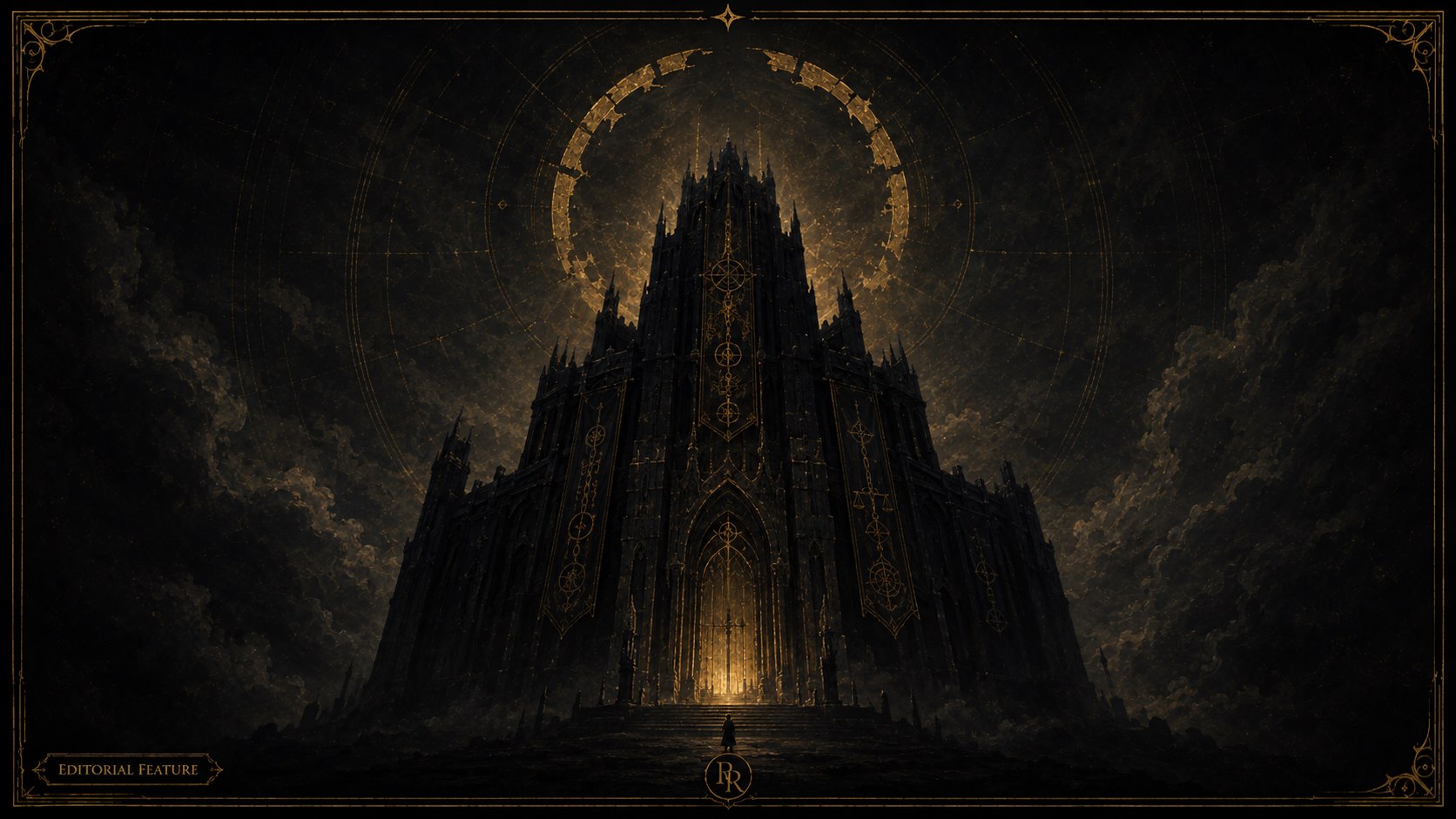
Episode 2 of Age of Umbra: Sallowlands introduces no single ruler of the Sallowlands. Instead, it shows several people who can shape what others are allowed to keep, where they may go, whether they receive care and which beliefs can be spoken safely.
Their power does not all work in the same way. Some of it comes from weapons. Some comes from rank, usefulness, inherited doctrine or the ability to persuade. The differences matter because each form of authority carries a different answer to the same question: who can challenge it?
Here, accountability means whether a decision can be questioned, verified, appealed or overruled — not merely whether the person exercising power can be identified.
Spoiler warning: This feature discusses Age of Umbra: Sallowlands Episode 2 in full, including entry to the Tower of Oxudos and the episode’s ending.
New to the miniseries? Read our spoiler-free cast, schedule and viewing guide. For the episode’s full critical verdict, read our Episode 2 review. For places, objects and unresolved lore, read what Episode 2 taught us.
Edra Stygs has power because she controls the encounter
In this encounter, Edra’s leverage does not depend on recognised public office or a territorial claim. It comes from armed control of the situation.
Stygs’ Company surrounds the travellers, tells them to place possessions on the ground and openly admits that some of its goods came from people who did not want to surrender them. The exchange is therefore coercive even when Edra describes it as trade.
Edra presents the company as operating by a code and, in this encounter, follows the bargain she has stated: both sides give and both sides take. She recognises the emotional value of Mr. Beaks, grants three selections in return and keeps the bargain once the choices are made.
That does not make the arrangement fair. It makes Edra’s authority legible. The travellers know who is setting the terms, what she wants and when the encounter is over.
No outside authority is present to hear an appeal or restrain the company, but Edra can be addressed directly. Her coercion is visible and personal. That makes it negotiable at the margins, not accountable to anyone beyond the encounter.
Bowen has a uniform, but very little freedom to decide
Bowen initially appears to offer the travellers institutional access. He is a Templar of the Twilight Exemplars, knows the tower’s customs and can testify that the group saved his life.
But he repeatedly explains how limited that position is.
The journey is his first beyond the tower. He is not yet a full Exemplar. He has lived at the tower his entire life without seeing Oxudos. When the travellers ask for an audience, Bowen can suggest that they present a compelling reason; he cannot arrange one himself.
His standing still matters. He introduces the group at the gate, vouches for them and later suggests that his father’s years of service may have helped their case. Yet the moment Archon Petra raises a hand, Bowen stops speaking.
Bowen therefore represents authority without autonomy. His uniform gives him responsibilities, expectations and some credibility, but not control over the institution he serves. Petra can overrule him immediately, and he cannot grant or deny what the travellers seek.
That distinction is important for his return. He is the sole survivor of a failed expedition and owes the tower an account of what happened. Episode 2 does not show the later conversation, so it remains unclear how much freedom he will have to describe events that do not fit neatly within the Exemplars’ beliefs.
Archon Petra exercises the authority that Oxudos cannot be seen exercising
Archon Petra is the clearest holder of formal power in the episode.
Her rank is visible before her name is known. She leads the armed formation, carries an enormous sword and chained tome, stops the group with one gesture and questions both Bowen and the strangers. She decides whether their request is credible enough to justify entry.
Petra does not merely enforce a fixed checklist. She interprets.
She weighs Bowen’s testimony, the travellers’ unusual appearance, their lack of shared faith and their request to meet the tower’s holiest figure. She allows them to make a case, listens to their appeals and grants protected entry without promising an audience with Oxudos.
The travellers can influence Petra, but only after translating their needs into forms the institution recognises. Caguama speaks as an Enduring survivor seeking hope and a peaceful end. Sister presents Mercy as a walking miracle and the new city as evidence of a changing age. Mercy asks the tower to provide the refuge its faith claims to offer.
Their success demonstrates that Petra’s authority includes discretion. It also means access depends on persuading one of the people empowered to interpret Oxudos’ edicts.
The episode does not establish whether Petra is the tower’s highest-ranking active leader or whether others could reverse her decisions. It does establish that, for the travellers and the accused Horizon Speaker, her judgement has immediate material force. The travellers can persuade her, but Episode 2 shows no formal appeal route or identified superior who reviews her decisions.
Lorraine holds power through competence and care
Lorraine does not command soldiers or control a gate. She can still change the travellers’ condition more directly than anyone else they meet inside the tower.
Her authority comes from knowledge that works.
Lorraine’s tea removes the travellers’ Sickened condition. She then identifies herself as part of a long line of holy herbalists, names the treatment’s ingredients and their purposes, and produces a further physical expulsion of the accumulated toxins.
This practical success gives religious authority a human face. The tower is not sustained only by patrols and prohibitions. It is also sustained by people who cultivate food, repair structures, treat illness and make continued life possible.
Lorraine attributes her work to holy tradition beneath the Ordinants and Oxudos. Her expertise is tested through observable results; the episode does not independently establish that faith is the cause of those results.
Her role nevertheless matters politically. Care gives institutions legitimacy. A sanctuary can demand loyalty more convincingly when its residents also receive real protection, food and medicine.
Lorraine is therefore not a counterweight outside the tower’s system. She is evidence of why ordinary people may value that system even when its hierarchy is difficult to question.
Oxudos has the greatest symbolic authority and the least visible presence
Oxudos does not appear in Episode 2, yet his name frames several of the tower’s most important public decisions.
Bowen quotes his edicts. Petra decides who may enter the sacred space associated with him. Lorraine places her family’s work beneath his authority. Caguama crosses the Sallowlands hoping that the prophet can offer guidance. Even Petra’s permission remains conditional because, she says, the prophet can be fickle.
The striking detail is not simply that Oxudos is absent for one episode. Bowen says he has lived at the tower his entire life without seeing him. Lorraine says she has not seen him for many years, not since she was a younger girl.
That makes Oxudos’ authority mediated. The travellers, Bowen and Lorraine encounter his will through edicts, doctrine and representatives rather than direct access.
Episode 2 does not prove that those representatives are distorting his wishes. It also does not establish whether Petra or every Archon lacks private access to him. Oxudos may be secluded, incapacitated, deliberately inaccessible or exactly as his followers describe. The episode leaves all of those possibilities open.
His absence does not prevent authority from operating in his name. It makes that authority harder for the travellers — and apparently many residents — to question or verify.
The Horizon Speaker shows what happens when dissent has no protection
The young elf accused at the end of the episode has almost no recognised power.
Other Exemplars identify him as a Horizon Speaker, say he possessed dark texts and accuse him of spreading lies that undermine their work. He denies wrongdoing and calls the incident a misunderstanding.
The episode does not establish whether he is guilty, what the texts contain or what the Horizons teach.
Petra asks whether he has been poisoning the minds of the tower, burns his face with magic and declares exile. The guards then throw him from the tower while his final warning fades into the distance.
The sequence contains no visible investigation, presentation of evidence or opportunity for a defence beyond his panicked denial. The crowd resumes its ordinary activity immediately afterwards.
His lack of authority is therefore as revealing as Petra’s power. Alternative ideas clearly exist inside the tower, but Episode 2 shows no protected space in which they can be tested openly and no visible process through which the judgement can be appealed.
The Horizon Speaker may be a deceiver, a dissident, a frightened believer or something else entirely. The institution does not need the audience to know which before punishment is carried out.
Power in the Sallowlands is not one hierarchy
Episode 2 does not reduce power to a simple divide between good people and bad rulers.
It contrasts direct, legible coercion with authority distributed through rank, doctrine and absent leadership. Neither is automatically accountable, but they are difficult to challenge in different ways.
Edra Stygs uses threat and bargaining without pretending that anyone else authorises her. Bowen serves a respected order but cannot make its important decisions. Petra offers genuine sanctuary while exercising severe control over its boundaries. Lorraine’s care demonstrates why the tower inspires loyalty. Oxudos’ absence allows his authority to be exercised through interpretation. The Horizon Speaker reveals how little protection remains for someone accused of challenging that interpretation.
The most unsettling comparison is between Edra and the tower.
Edra’s coercion is obvious. The travellers can see her weapons, hear her terms and negotiate with the person making the demand, but no outside authority is shown reviewing her conduct. The Tower of Oxudos offers far more: walls, food, medicine, community and defence. Its power is harder to confront because it is distributed across ranks, traditions and a prophet whom even lifelong residents may never meet.
That does not make the tower’s refuge false. It makes its authority consequential.
Episode 2’s people show that survival in the Sallowlands depends on power. The real question is whether its decisions can be questioned, verified, appealed or overruled before someone else decides what must be surrendered.
Sources
- The Onyx Spire | Age of Umbra: Sallowlands | Episode 2Critical Role
- Critical Recap: Age of Umbra — Sallowlands Episode 2, The Onyx SpireCritical Role
- Age of Umbra: Sallowlands CreditsCritical Role
Enjoyed this article?
Supporting Rolling Realm helps fund more independent reviews, lore guides and spoiler-aware coverage. Every article remains free.
Age of Umbra: Sallowlands — Cast, Schedule and Where to Watch
Matthew Mercer leads a new standalone Daggerheart story through six weeks of dark fantasy in the Halcyon Domain.
A spoiler-free guide to the cast, characters, weekly schedule, UK release times and viewing options for Critical Role’s six-part Daggerheart miniseries.
Age of Umbra: Sallowlands Episode 2 Review: Sanctuary with Teeth
A long road leads to richer character work, strange comedy and a sanctuary whose safety comes with an oppressive edge.
The Onyx Spire deepens the new party through intimate disagreements and reaches an exceptional final act inside a sanctuary built from genuine safety, inaccessible authority and fear.
Sallowlands Episode 2: What We Learned
Stygs’ Company, the Tower of Oxudos and a newly appeared city beside water returned to part of the dead lake.
The Onyx Spire reveals a mobile trade company, a failed religious expedition, a fortified vertical sanctuary and a newly appeared city beside water returned to part of the dead lake.