What We Learned from Age of Umbra: Sallowlands Episode 2
Stygs’ Company, the Tower of Oxudos and a newly appeared city beside water returned to part of the dead lake.
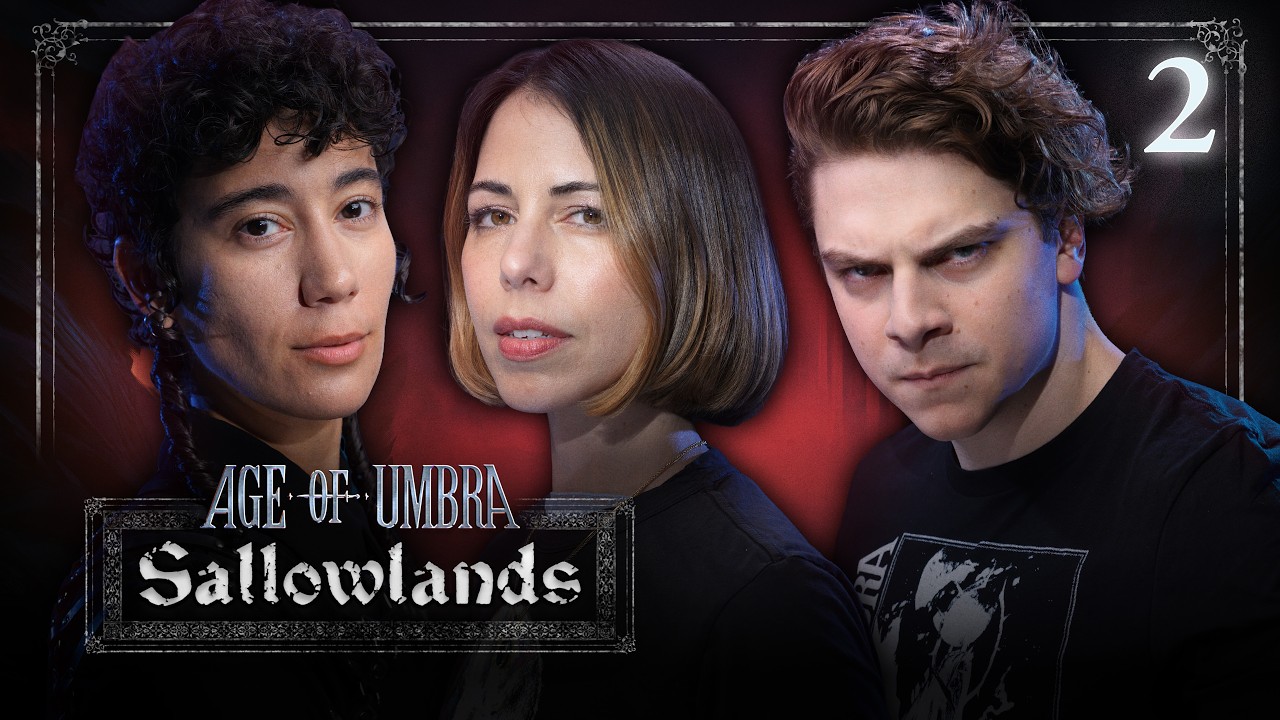
The Onyx Spire turns several of Episode 1’s distant promises into physical places, working systems and immediate warnings.
The travellers finally reach the Tower of Oxudos. On the way, they encounter a mobile company with its own trade law, learn why Bowen’s religious expedition failed and gain their clearest view yet of the city drawing people across the Sallowlands.
Spoiler warning: This article discusses Age of Umbra: Sallowlands Episode 2 in full, including the Tower of Oxudos, the newly appeared city and the episode’s ending.
New to the miniseries? Read our spoiler-free cast, schedule and viewing guide. Catching up on the world? Begin with what Episode 1 taught us. Looking for a verdict rather than a lore guide? Read our Episode 2 review.
These are the main things Episode 2 teaches us about the Sallowlands.
1. The Sallow Opens are exposed, unstable and still inhabited
Leaving the Rotten Shallows does not place the travellers on an empty road. The Sallow Opens are the exposed floor of the former lake: rolling white and yellow dust, dry salt, broken stone and the remains of structures that once stood beneath the water.
The land can change beneath a traveller’s feet. Dillywin notices abrupt chasms forming where movement under the dunes shifts their shape. The group avoids whatever is travelling below rather than learning what it is.
A large storm then removes visibility and turns movement into a group survival problem. The travellers combine shelter, local knowledge, height and rope to stay together and recover their route.
The episode does not identify the creature beneath the dunes or explain how often the landscape changes. It does confirm that the dry lake bed is neither still nor empty.
2. Stygs’ Company mixes raiding, salvage and trade
The armed company first appears to be surrounding the travellers for a shakedown. Edra Stygs instead presents the encounter as an exchange.
That does not make the arrangement voluntary in any ordinary sense. The company approaches with weapons ready, expects the travellers to place possessions on the ground and admits that its goods belonged to people who were unhappy to lose them.
But the group does follow a stated rule: take something, leave something. Edra later summarises the practice as both sides giving and both sides taking.
The goods offered show how useful objects circulate through the Sallowlands after their original owners are gone:
- a ragged but functional bow;
- an extending eyeglass in a weathered bronze cylinder;
- a recipe for a recovery oil or liquid;
- a folded construction of wood, hinges and fabric that becomes a makeshift glider.
Caguama gives Edra Mr. Beaks, a small bird-like puppet she remembers from childhood. Its emotional value earns the travellers the right to choose three goods. They take the bow, the recipe and the folded glider, leaving the eyeglass behind.
Bowen keeps his own equipment. Edra explains that Stygs’ Company does not want Twilight Exemplar gear because wearing it would make the company a target.
Stygs’ Company therefore operates as both threat and moving market. It redistributes salvaged or stolen objects according to a code that is coercive, strange and apparently sincere.
3. Bowen’s failed mission reveals a wider religious conflict
Bowen was travelling as part of his rite of passage towards becoming a full knight. His company went north to Edorodu seeking texts associated with Xanthalos, the Veiled God of empathy and obsession.
The texts were rumoured to contain a prophecy concerning Jeraydah and the faith’s doctrine. Bowen says they had already been taken by a wandering evangelist of the Orphid Smile.
He also says Edorodu’s current leadership has cast off faith in the Veiled Gods and simply gave the texts away. The episode does not independently verify Bowen’s judgement of that leadership, the prophecy or the evangelist. It establishes what his company believed it had been sent to recover and why it returned empty-handed.
The failed mission expands the world beyond the lake bed. Religious authority is not secure everywhere. Old texts can pass between communities, abandoned faiths and travelling preachers, while armed orders compete to recover their meaning.
Bowen then has to return as the only survivor of a mission that failed before the Tatchra killed his companions. His anxiety is therefore not only grief. He expects to report an empty-handed expedition to the Archons who sent it.
4. The Tower of Oxudos is a fortified vertical settlement
Episode 1 established that the tower was once the Aetercium, an island prison-temple standing in Elytros Lake. Episode 2 shows how that Old World structure has been adapted after the water disappeared.
The former island is now a vast pillar rising from the dry lake bed. Its base contains walls, battlements, towers and openings carved into the rock. Chains and winches raise cages between the ground and the settlement above. Ballistae, crossbows, patrols and heavy fortifications protect the approaches.
The tower is not only a military outpost. Green rows and forest-like cultivation occupy some of its levels. Inside, families, soldiers, labourers, herbalists and other residents move through a dense multi-tiered community.
The construction combines old and new material. Some stone appears transplanted from ruins elsewhere in the Sallowlands, while other sections may have been shaped magically. This is a settlement built on an Old World monument using whatever the present can recover.
Episode 2 demonstrates active cultivation and food harvesting inside the tower. It does not explain the community’s water source, storage or distribution.
The supporting rock is also visibly eroding and cracking. The narration questions whether the platform will still remain in another hundred or two hundred years, placing a long-term limit on the sanctuary’s apparent permanence.
Its Pyre, cultivated levels, herbal knowledge and organised defence provide real protection. The tower has not merely preserved a religious symbol. It has built a functioning community around it, even though the structure beneath that community is not secure forever.
5. The tower’s healing knowledge is practical as well as religious
The travellers enter the tower still carrying sickness from the Rotten Shallows. Lorraine, one of a long line of holy herbalists, gives them a gritty floral tea that removes the condition.
She names three ingredients and their intended effects:
- Theryn Leaf to settle nausea;
- Thunder Breys, broken down into dust for indigestion;
- Lemongrass Horsehair Burr to slow breathing briefly and help purify toxins in the blood.
The treatment ends with a physical purge. The travellers sweat out an oily greenish-yellow substance before the sickness passes.
Lorraine attributes the result to faith and holy miracles. The scene also shows specialised knowledge, preserved ingredients and a practiced treatment. The episode supports both observations: the medicine works, and the person administering it understands that work through the faith of Jeraydah and Oxudos.
It does not establish whether divine power is required for the remedy, whether every ingredient grows inside the tower or how widely the treatment is available.
6. The new city is larger, newer and stranger than the rumours suggested
From the tower’s lifting cages, the entire group gains its clearest view across the Sallowlands.
The city is far larger than the distant lights suggested in Episode 1. Buildings and towers crowd its western edge, and water is present in an inlet within a lake bed that had not held a body of water for roughly seventy years.
Later, Alphonse questions a keeper at the tower’s southern gate. The resident says the city appeared around three months earlier after a terrible cracking sound. That is testimony from one witness, not a complete explanation of what happened.
The resident also says Twilight Exemplar groups have been sent towards the city. The episode does not establish what they found or whether any returned.
The conversation becomes stranger when Alphonse alone sees something resembling a ship descend through the clouds and disappear into the city.
The episode does not identify the vessel, explain what holds it aloft or prove where it came from. Alphonse subsequently reports the sight to the others.
These details move the city beyond rumour without making its promise trustworthy. It physically exists. Its appearance was recent. Water is present near it after decades without a body of water in the lake bed. A vessel can apparently reach it through the sky. The episode does not establish that the city caused the water to return, that it existed there before or that it has now returned. Nor does it confirm that the city grants wishes, welcomes every traveller or represents the new gods described in the stories.
7. Oxudos’ authority is powerful despite his inaccessibility
Caguama travels to the tower hoping to meet a prophet said to have survived the Apostasy. Episode 2 does not confirm that meeting.
Bowen has lived at the tower his whole life and has never seen Oxudos. He briefly wonders aloud whether the prophet is still around before correcting himself. Lorraine remembers seeing Oxudos when she was young, but not recently.
Archon Petra says the prophet can be fickle and promises only to deliver Caguama’s request. Ordinary residents appear to have little or no access to the person whose edicts organise their lives.
None of this proves that Oxudos is dead, absent or fraudulent. It establishes prolonged inaccessibility.
That distinction matters because authority continues to operate in his name. The Archons interpret doctrine, decide who may enter, identify blasphemy and impose judgement. Oxudos does not need to appear in Episode 2 for his claimed authority to shape every part of the tower.
8. The Tower offers refuge only within strict religious boundaries
The party is genuinely helped inside Oxudos. They are sheltered, cured and given access to supplies. The population is organised, productive and protected from the surrounding corruption.
The ending shows the conditions attached to that refuge.
A frightened man found with allegedly dark texts is branded a Horizon Speaker and accused of spreading “the word of the Horizons.” He denies wrongdoing and calls the situation a misunderstanding. His guilt and the truth of his claims remain unconfirmed.
Archon Petra does not investigate the accusation in front of the travellers. She burns his face, declares him exiled and has him thrown from the tower.
The scene does not prove that every resident supports the punishment. One young woman turns away after the accused man looks towards her, and the wider crowd does not intervene.
What it does establish is the tower’s public method of enforcement. Accusations of blasphemy can lead quickly to physical marking, exile and likely death. The ending suggests that suppressing forbidden questions is treated as part of protecting the community’s survival.
A working Pyre and a functioning society do not make the sanctuary morally safe for everyone.
The questions still waiting for answers
Episode 2 confirms more of the Sallowlands while making its central mysteries more urgent:
- What prophecy did the texts of Xanthalos contain?
- Who is the evangelist of the Orphid Smile who took them?
- Why has Edorodu rejected the Veiled Gods?
- Is Oxudos still alive and present inside the tower?
- Who decides which of his edicts apply when he cannot be reached?
- What are the Horizons, and what did the accused Horizon Speaker actually believe?
- Why did the new city appear three months earlier?
- What caused water to return to the dead lake bed?
- What was the ship Alphonse saw descending through the clouds?
- What happened to the Twilight Exemplar groups sent towards the city?
Final thoughts
The main lesson of The Onyx Spire is that survival in the Sallowlands depends on systems as much as individual courage.
Stygs’ Company survives through armed exchange and salvage. The Twilight Exemplars preserve a population through fortification, cultivation, medicine and strict belief. The newly appeared city stands beside water and receives movement through the sky that the dead lake has not supported for decades.
Every system carries a promise. Every promise also carries unanswered questions about who controls it, who benefits and what happens to people who do not accept its rules.
The travellers have reached a genuine sanctuary. Episode 2 makes clear that reaching safety is not the same as reaching freedom.
Sources
- The Onyx Spire | Age of Umbra: Sallowlands | Episode 2Critical Role
- Critical Recap: Age of Umbra — Sallowlands Episode 2, The Onyx SpireCritical Role
- Age of Umbra: Sallowlands CreditsCritical Role
Enjoyed this article?
Supporting Rolling Realm helps fund more independent reviews, lore guides and spoiler-aware coverage. Every article remains free.
Age of Umbra: Sallowlands — Cast, Schedule and Where to Watch
Matthew Mercer leads a new standalone Daggerheart story through six weeks of dark fantasy in the Halcyon Domain.
A spoiler-free guide to the cast, characters, weekly schedule, UK release times and viewing options for Critical Role’s six-part Daggerheart miniseries.
What We Learned from Age of Umbra: Sallowlands Episode 1
The Enduring, a dead ancient lake and the uncertain promise drawing five pilgrims west.
Scattered Pilgrims introduces the Enduring, the dead lake bed of the Sallowlands, the fragile protection of the Pyres and a rumoured city whose promise has drawn five very different travellers together.
Age of Umbra: Sallowlands Episode 2 Review: Sanctuary with Teeth
A long road leads to richer character work, strange comedy and a sanctuary whose safety comes with an oppressive edge.
The Onyx Spire deepens the new party through intimate disagreements and reaches an exceptional final act inside a sanctuary built from genuine safety, inaccessible authority and fear.