The Tatchra: Beauty Beneath the Umbra
What Sallowlands Episode 1 reveals about an Old World protector that went mad during the Apostasy.

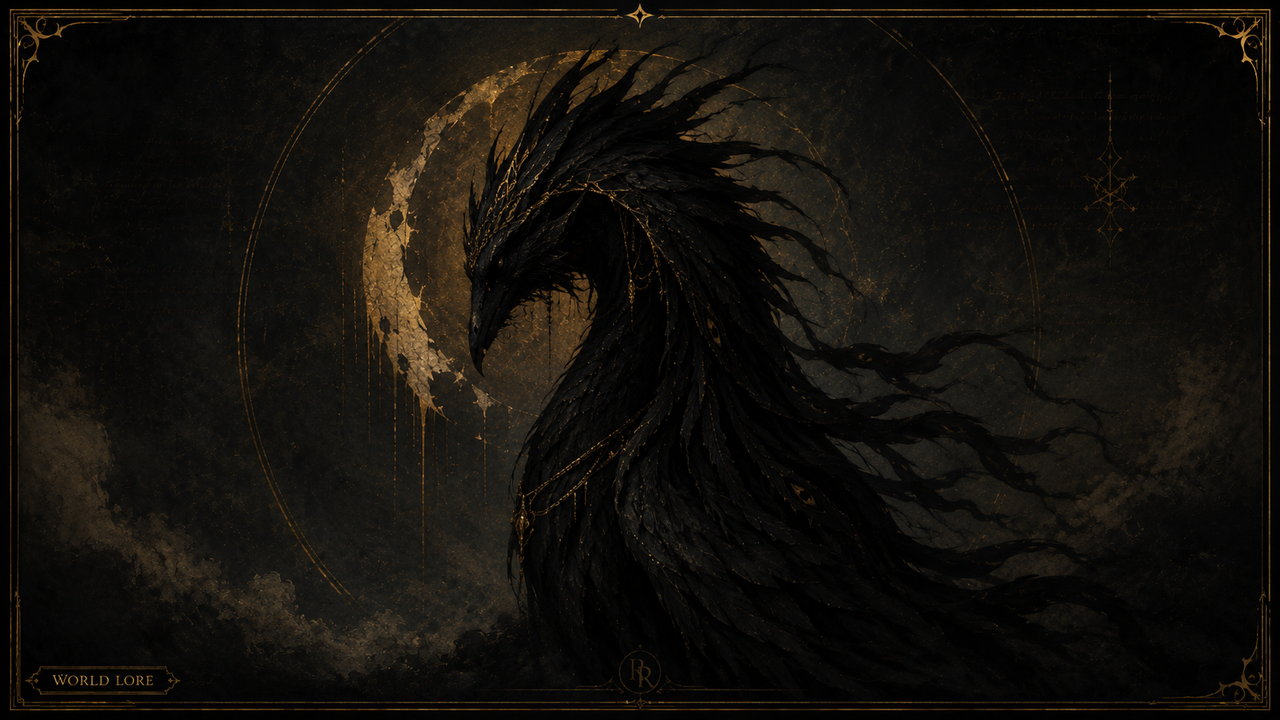
The Tatchra enters Age of Umbra: Sallowlands as a nightmare.
It descends upon the Rotten Shallows in a storm of orange, red and yellow feathers. A human-like face sits within its enormous beak. It kills several Twilight Exemplars, draws a memory of sadness or shame from Alphonse and appears to relish what it finds.
Yet this violent creature was not always a monster.
The Tatchra was once a beautiful bird of magical wisdom and protection. Episode 1 says that it went mad during the Apostasy and later describes its consciousness as fractured after a century of lost divine connection and slowly accumulating corruption.
Caguama forms a brief connection with that fractured consciousness. The encounter suggests contact with something beyond the creature’s immediate violence, but it does not confirm that Caguama reaches a distinct former identity—or that the Tatchra can ever be restored.
That uncertainty is what makes the encounter worth examining beyond the broader events covered in our Episode 1 lore roundup.
What was the Tatchra before the Apostasy?
The Tatchra was a beautiful bird associated with magical wisdom and protection. That history stands in sharp contrast to the violent predator attacking a squad of Twilight Exemplars in the Rotten Shallows.
The episode states that the Tatchra went mad when the Apostasy occurred. Later, the Game Master describes its consciousness as fractured after a century of losing whatever divine connection it once possessed, while a slowly crawling corruption steeped within it.
The precise relationship between those processes remains unexplained. The episode does not tell us whether the loss of that connection caused the madness, whether the corruption transformed the creature further or how much of its earlier consciousness remains accessible.
What is confirmed is that the Tatchra’s present violence was not always its defining nature.
It was associated with magical wisdom and protection. It belonged to the Old World Caguama remembers rather than to the brutal landscape in which the travellers encounter it.
The Tatchra therefore becomes more than a monster placed in the party’s path. It is surviving evidence of what the Apostasy did to a living Old World creature.
A creature that attacks through memory
The Tatchra’s abilities reach beyond physical violence.
A glimmer of its past legendary essence connects with Alphonse. The connection reveals parts of his nature and draws out a memory of sadness or shame: Alphonse sees himself chained to a wooden platform while people stare at him. The creature appears to take pleasure in the pain it exposes.
One possible interpretation is that this ability echoes the magical wisdom the Tatchra once possessed. A being capable of perceiving hidden memories or emotions might once have used that insight in service of protection.
Episode 1 does not confirm that connection.
The memory attack may be unrelated to the Tatchra’s former purpose. We cannot safely conclude that one power has survived while only its intent has changed. What the scene establishes is narrower: even in its fractured state, the creature can reach into another being and uncover inner pain.
That ability becomes important when Caguama decides that the same capacity may offer a way to reach back.
Caguama chooses comfort instead of force
Caguama approaches the encounter with a theory, not certainty.
They remember the Tatchra as wise, knowledgeable and cunning. After seeing it access and enjoy Alphonse’s shame, Caguama wonders whether that response means the creature can still connect with something beyond its immediate rage.
They stare into its human-like face and ask:
“What ails you that is from within and not from without?”
Caguama succeeds critically in their attempt to comfort it. The feral violence stops. The Tatchra folds its wings, pushes its human face towards Caguama and tries to form language. Its glazed eyes appear to seek a connection.
This timing matters.
The encounter changes before Caguama later says “You are beautiful.” The final sentence does not independently stop the attack. It is the culmination of a longer compassionate approach that begins with Caguama’s question, continues through their story of Osha and leads into direct mental contact.
Caguama tells the creature about the person who gave her life for them and their son. They explain the promise to help those who once lived full and beautiful lives, then tell the Tatchra that they see that history in it.
That belief belongs to Caguama. The episode does not yet confirm that the creature understands itself in the same way.
The connection inside the Tatchra
As the Tatchra pulls Caguama closer, the episode offers its clearest description of the creature’s present mind.
Its consciousness is fractured. Its former divine connection has been lost, and corruption has slowly steeped within it for a century. Normal language fails, but the moment between the two creatures creates another form of contact.
Caguama sees a prismatic rush of landscapes, shapes, rainbows, colour, light, stars, gold and bridges. That beauty gives way to an overwhelming wave of sorrow, chaos and pain that threatens their sanity.
The vision adds to the episode’s explicit description of the Tatchra’s consciousness as fractured rather than absent.
It does not tell us exactly what Caguama sees. The images may be memories, emotional impressions or another form of magical communication. Calling them literal memories would go beyond the evidence.
What can be said is that the connection contains more than violence. It carries beauty and warmth alongside immense suffering.
Caguama holds on by thinking of Osha: care, tenderness, compassion and belief. Rather than withdrawing, they lean their forehead against the creature and surrender to the connection.
Why “You are beautiful” still matters
Caguama whispers:
“You are beautiful.”
Their forehead touches the Tatchra’s. The creature appears to sigh, then recoils violently. It flails, screams, bites at the air, knocks down trees and flies into the night.
The words do not begin the interruption in its violence; that change occurred several minutes earlier. They also do not provide a simple explanation for its departure.
The sigh could suggest understanding. The recoil might represent recognition, pain, confusion or another fracture in a mind unable to process the connection. None of those readings is confirmed.
The importance of the sentence lies first in what it reveals about Caguama.
They address the Tatchra according to their belief that its former beauty and wisdom still matter. They refuse to reduce it to either the guardian it once was or the danger it has become.
Caguama’s broader compassionate approach changes the course of the encounter. The episode does not isolate whether the question, the successful attempt to comfort it, the story of Osha, the shared vision or the final words cause the Tatchra to flee.
Did the Tatchra remember what it was?
Episode 1 does not answer that question.
The Tatchra attempts language, seeks a connection and shares an experience filled with beauty and sorrow. Those events may indicate memories, emotions or traces associated with its former existence.
They do not prove that a complete earlier identity remains trapped beneath the corruption.
The scene also does not establish that the Tatchra can be healed. Caguama does not cure, tame or permanently calm it. The creature leaves in panic and remains dangerous.
The strongest conclusion is restrained: Caguama’s attempt to comfort the creature coincides with a clear change in its behaviour, and the connection reveals a fractured inner experience that physical combat had not exposed.
Whether the Tatchra understands Caguama’s compassion as recognition remains unresolved.
What the encounter may tell us about the Sallowlands
The Tatchra may retain memories, emotions or traces associated with its former existence. Episode 1 does not establish this as a general rule for every being changed by the Apostasy.
It does, however, complicate the divide between monster and victim.
The creature is responsible for immediate and terrible violence. It is also a living casualty of the world’s collapse: stripped of an old connection, steeped in corruption and left with a fractured consciousness.
Both truths matter. Compassion does not make the Tatchra harmless, and danger does not erase what happened to it.
That tension gives the encounter its wider significance without requiring the episode to answer questions it has deliberately left open.
The tragedy of a protector that can no longer protect
The Tatchra is frightening because of what it can do.
It is tragic because of what it used to be.
A creature once associated with wisdom and protection now kills soldiers and exposes hidden shame. Its present ability to uncover inner pain may echo its former magical wisdom, but Episode 1 does not confirm that the two abilities share an origin.
Caguama cannot repair a century of madness and corruption in a single encounter. They can only meet the fractured creature with something other than force.
That choice changes the course of the scene and ends with the Tatchra fleeing, although the episode does not establish that any one word or action causes the final response.
The creature leaves still broken, still dangerous and still carrying a depth of sorrow that nearly overwhelms the person who touches it.
Nothing about its future is certain.
But after the connection Caguama experiences, it is impossible to see the Tatchra as only a monster again.
Sources
Enjoyed this article?
Supporting Rolling Realm helps fund more independent reviews, lore guides and spoiler-aware coverage. Every article remains free.
What We Learned from Age of Umbra: Sallowlands Episode 1
The Enduring, a dead ancient lake and the uncertain promise drawing five pilgrims west.
Scattered Pilgrims introduces the Enduring, the dead lake bed of the Sallowlands, the fragile protection of the Pyres and a rumoured city whose promise has drawn five very different travellers together.

Age of Umbra: Sallowlands Episode 1 Review: Beauty in the Ruins
A grotesque, compassionate premiere builds an instantly memorable party, even when its first battle and repeated travel challenges slow the episode.
Scattered Pilgrims introduces a vivid dark-fantasy party and ends with an exceptional act of compassion, although its long first battle and repeated travel challenges weaken the middle.
Friends Before Answers: How Sallowlands Builds a Party Through Compassion
Episode 1 makes five alarming strangers feel like a party by showing them choose care before certainty.
Episode 1 turns mistaken attacks, rescue choices and battlefield trust into a clear pattern: the travellers become believable friends because they care for one another before they have complete answers.